

Understanding Dubai travel cost from the USA requires examining multiple expense categories, including international flights, accommodation, dining, transportation, attractions, and miscellaneous spending. According to recent tourism data and pricing analysis, American travelers can expect daily costs ranging from approximately $115 to $750 per person, depending on travel style, with complete trip budgets varying significantly based on duration and preferences.
This comprehensive Dubai trip budget guide provides verified cost breakdowns across all major expense categories, helping US travelers plan realistic budgets for visiting one of the Middle East’s most dynamic destinations. From economy-focused backpackers to luxury seekers, Dubai accommodates diverse budgets while delivering world-class experiences, modern infrastructure, and unique attractions unavailable elsewhere.
Flight Costs from the USA to Dubai
International airfare typically represents the largest single expense for US travelers visiting Dubai. According to current pricing data from major booking platforms, round-trip flights from the United States to Dubai range from approximately $341 to $1,794, depending on departure city, travel dates, airline selection, and booking timing.
Major US Departure Cities
New York to Dubai represents one of the most common routes, with round-trip prices ranging from $620 to $1,100. Direct flights on this route take approximately 12 hours 30 minutes to 13 hours, offering convenient nonstop service. Los Angeles to Dubai flights average $900 to $1,100 round-trip with flight durations ranging from 16 to 36 hours,s depending on connections.
Washington D.C. to Dubai flights start around $341 for one-way tickets, with round-trip fares typically ranging from $700 to $1,200. Seattle to Dubai averages approximately $357 for one-way tickets. Texas to Dubai round-trip tickets average $1,000 to $1,200 with durations ranging from 15 to 24 hours, depending on stops.
Seasonal Price Variations
According to travel booking platforms, January represents the cheapest month to book Dubai flights from the USA, with average prices around $547. July typically sees the highest airfare, with average costs reaching $684. December through February generally commands premium pricing due to peak tourist season and pleasant weather conditions.
Money-Saving Flight Strategies
Booking flights 2-3 months in advance typically yields better rates than last-minute purchases. Comparing multiple airlines, including Emirates, United Airlines, Turkish Airlines, and budget carrier,s reveals significant price differences. One-way flights sometimes cost as low as $259 on Turkish Airlines, $269 on SAUDIA, or $279 on Delta when booked strategically.
Flying during off-peak months, particularly summer (June-August), reduces flight costs substantially despite higher temperatures in Dubai. Mid-week departures and returns generally cost less than weekend travel. Using airline points, credit card rewards, or promotional codes can dramatically reduce out-of-pocket flight expenses.
Realistic Flight Budget Estimate
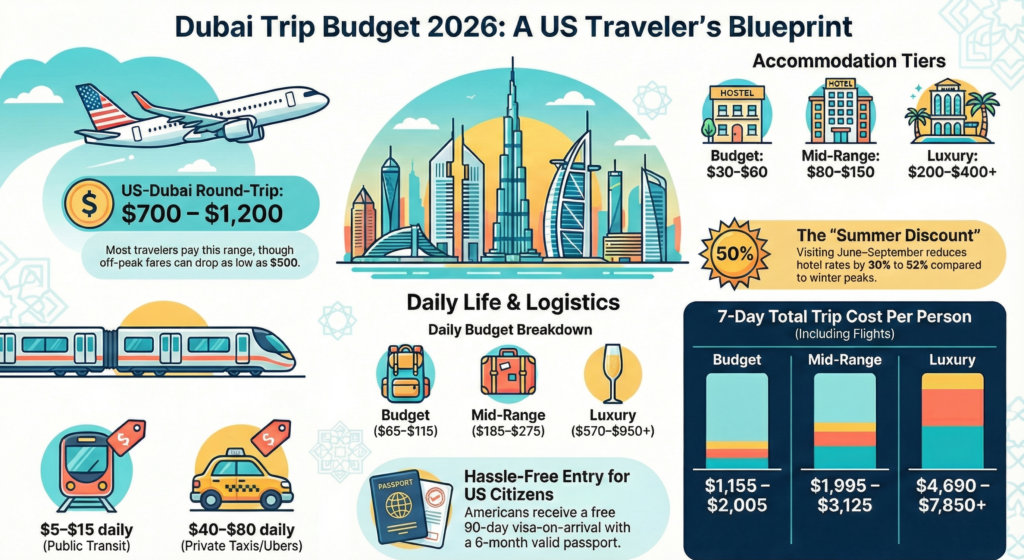
Most US travelers spend approximately $700 to $1,200 per person on round-trip flights to Dubai. Budget-conscious travelers booking well in advance during off-peak periods may secure fares as low as $500-700, while last-minute peak-season bookings can exceed $1,500 per person.
read: Cheapest Cities in Europe 2026: Food, Hotel & Transport Breakdown Guide
Accommodation Costs in Dubai

Dubai offers diverse lodging options across all price ranges, from budget hostels to iconic luxury properties. According to recent hotel pricing data, accommodation represents a significant but controllable expense component, with strategic selection dramatically impacting overall trip budgets.
Budget Accommodation ($25-$50 per night)
Budget hotels and hostels in Dubai start from approximately $25-50 per night. Hostel dormitory beds range from $10-30 per night, while private rooms in budget properties cost $40-70 nightly. Areas like Deira, Bur Dubai, and Al Barsha offer particularly good value for budget-conscious travelers.
According to hotel pricing analysis, budget hotels average $36 per night during low season and $68 during high season. Popular budget chains and independent properties maintain basic but clean facilities with essential amenities. Many budget accommodations provide free WiFi, air conditioning, and convenient metro access.
Mid-Range Accommodation ($50-$150 per night)
Mid-range hotels typically cost $50-150 per night, depending on location and season. Three-star hotels average $44 per night according to booking platforms, while four-star properties average $77 nightly. Properties in neighborhoods like Bur Dubai, Deira, and near Dubai Metro stations offer excellent value with modern amenities.
Mid-range accommodations generally include comfortable rooms, swimming pools, on-site restaurants, and helpful staff. Many properties offer breakfast packages adding value for travelers. Areas slightly outside downtown Dubai or away from beachfront locations provide better mid-range value while maintaining excellent public transport connections.
Luxury Accommodation ($150-$300+ per night)
Luxury hotels in Dubai range from $150 to $300+ per night, with five-star properties averaging $209 nightly according to booking data. Premium locations, including Downtown Dubai near Burj Khalifa, Dubai Marina, Palm Jumeirah, and beachfront areas, command higher rates but deliver exceptional service and amenities.
Iconic properties, including Atlantis The Palm, Burj Al Arab, Address Downtown, and Armani Hotel, offer premium experiences with prices ranging from $300 to over $1,000 per night. These properties feature world-class dining, elaborate pools, spa facilities, and distinctive architecture, creating memorable luxury experiences.
Seasonal Accommodation Pricing
December through February represents peak season with significantly higher accommodation prices across all categories. Summer months (July-September) offer the cheapest hotel rates with prices dropping 30-52% compared to winter peaks. Booking approximately one month in advance generally secures better rates, though last-minute deals sometimes emerge during off-peak periods.
Sundays typically offer the cheapest hotel rates, while Fridays command premium pricing. Package deals combining flights and hotels through platforms like Expedia or KAYAK often provide better overall value than booking components separately.
Realistic Accommodation Budget Estimate
Budget travelers: $30-60 per night Mid-range travelers: $80-150 per night
Luxury travelers: $200-400+ per night
Read: Best Time to Visit Japan by Season Complete Month-Wise Travel Guide (2026)
Food and Dining Expenses

Dubai’s diverse culinary landscape accommodates every budget, from affordable street food to Michelin-starred fine dining. According to restaurant pricing data and cost-of-living analysis, food expenses vary dramatically based on dining choices and habits.
Budget Dining Options ($15-30 per day)
Budget-conscious travelers eating primarily at local cafes, food courts, and fast-food restaurants can manage approximately $15-30 daily. Fast food combo meals at McDonald’s, KFC, or similar chains cost 25-35 AED ($6.80-$9.50). Shopping mall food courts offer diverse options with meals ranging from 30-60 AED ($8-16) per person.
Local cafes and small restaurants in residential areas serve traditional Middle Eastern, Indian, Pakistani, and Asian cuisines at 20-50 AED ($5.50-14) per meal. Street food vendors offer shawarma, falafel, and other items for 10-20 AED ($2.70-$5.50). Supermarkets like Carrefour, Lulu Hypermarket, and Spinneys provide groceries at prices comparable to Western Europe for those preparing some meals.
Mid-Range Dining ($40-80 per day)
Mid-range dining at casual restaurants with table service typically costs 30-80 AED ($8-22) per person for main courses. Complete meals, including appetizers, main dishes, and beverages,s average 70-180 AED ($19-49) per person at mid-range establishments. Many restaurants offer lunch specials or set menus providing better value than dinner pricing.
International cuisines, including Italian, Indian, Chinese, Japanese, and Arabic options, populate Dubai’s dining scene. Restaurant locations significantly impact pricing, with tourist areas and premium locations charging substantially more than neighborhood establishments. Sharing dishes family-style reduces per-person costs considerably.
Fine Dining ($100+ per day)
High-end restaurants, particularly those in luxury hotels or featuring celebrity chefs, charge 100-1,200 AED ($27-327) per person. Michelin-starred venues and signature restaurant experiences command premium pricing. Restaurants with Burj Khalifa views, beachfront settings, or unique concepts typically add 20-50% to meal costs.
Multi-course tasting menus at fine dining establishments range from 250-700 AED ($68-190) per person. At.mosphere on the 122nd floor of Burj Khalifa, Ossiano underwater restaurant at Atlantis, and other signature venues deliver unforgettable experiences at corresponding price points.
Beverage Costs
Non-alcoholic beverages at restaurants cost 5-10 AED ($1.40-2.70) for soft drinks and 10 AED ($2.70) for juice. Coffee at cafes ranges from 15-25 AED ($4-7). Alcoholic beverages carry high taxes with beer costing 35-45 AED ($9.50-12) at mid-range hotels and cocktails ranging from 40-60 AED ($11-16). Alcohol availability remains limited to licensed hotels and specific venues.
Additional Food Considerations
Tipping remains optional in Dubai as most restaurants include 10% service charge in bills. Some establishments add 10% service charge plus goods and services tax automatically. Parking fees of 5-25 AED ($1.40-7) per hour apply at some restaurant locations. Hotel restaurants typically charge 20-50% more than independent establishments for comparable meals.
Realistic Food Budget Estimate
Budget travelers: $20-35 per day (mostly street food, food courts, supermarkets) Mid-range travelers: $50-80 per day (mix of casual dining and occasional nicer restaurants) Luxury travelers: $120-200+ per day (fine dining, hotel restaurants, premium experiences)
Read: 3 Days Netherlands trip for First-Time Travelers
Local Transportation Costs

Dubai’s modern, efficient public transportation system provides affordable mobility throughout the city. According to current transit data, transportation represents a relatively minor expense category when utilizing public options strategically.
- Dubai Metro: The Dubai Metro operates two lines (Red and Green) covering major tourist attractions, business districts, and residential areas. Metro fares range from 3-8.50 AED ($0.80-2.30) depending on distance traveled and number of zones crossed. Day passes cost approximately 20 AED ($5.45) providing unlimited travel across the network. The metro operates from approximately 5:00 AM to midnight on weekdays with extended hours until 1:00 AM on Thursdays and Fridays. Trains run frequently with 4-7 minute intervals during peak hours. The system maintains excellent cleanliness, air conditioning, and punctuality, matching world-class standards.
- Buses and Trams: Dubai’s bus network complements metro coverage with extensive routes throughout the city. Bus fares range from 3-5 AED ($0.80-1.40) for standard routes. The Dubai Tram operates along Dubai Marina and JBR with similar pricing to metro services. Integrated ticketing allows seamless transfers between buses, trams, and the metro.
- Nol Cards: The rechargeable Nol Card provides convenient payment for all public transport. Red tickets (single-use) cost slightly more than Silver Nol Cards (rechargeable, personalized). Gold cards offer access to Gold Class metro cabins. Tourists typically use Silver cards loaded with sufficient credit for their stay, avoiding the 1 AED surcharge on single-use red tickets.
- Taxis and Ride-Sharing: Dubai taxis operate on metered fares starting at 5 AED ($1.40) with additional charges per kilometer. Typical journeys within the city cost 20-40 AED ($5.50-11). Airport to downtown Dubai costs approximately 50-70 AED ($14-19). Peak hour surcharges and nighttime fees apply during specific periods. Uber and Careem (Middle East ride-sharing app) operate throughout Dubai with pricing comparable to or slightly cheaper than traditional taxis. These services offer convenience, English-speaking drivers, and cashless payment options.
Rental Cars: Car rentals start from approximately 100-150 AED ($27-41) per day for economy vehicles through local companies, with international brands charging higher rates. Fuel costs remain relatively low compared to Western countries. Parking fees range from free at malls (with validation) to 4 AED ($1.10) per hour in paid zones. Highway tolls apply on certain routes using Salik tags charged automatically to rental agreements.
read: Thailand Travel Cost Breakdown for 7 Days (2026 Guide)
Realistic Transportation Budget Estimate
Budget travelers (primarily public transport): $5-15 per day Mid-range travelers (mix of public transport and occasional taxis): $15-30 per day Luxury travelers (primarily taxis/Uber or rental car): $40-80 per day
Attraction and Entertainment Costs

Dubai offers diverse attractions ranging from free experiences to premium ticketed activities. According to current pricing data, entertainment costs vary dramatically based on activity selections.
Major Paid Attractions
Burj Khalifa observation deck (levels 124 & 125) costs approximately 149 AED ($40) for standard entry, with prices varying based on time slot selection. Sunset times command premium pricing. At The Top SKY (level 148) costs 378 AED ($103), offering higher viewing platform access.
Dubai Aquarium & Underwater Zoo in Dubai Mall charges approximately 120-150 AED ($33-41) for combination tickets. The Dubai Frame costs 50 AED ($14) for adults. Global Village (seasonal, November-April) charges approximately 25 AED ($7) entry with individual attractions requiring additional fees.
Desert safari experiences, one of Dubai’s most popular activities, range from 150-400 AED ($41-109) per person, depending on tour type and inclusions. Evening desert safaris with dinner, entertainment, and activities typically cost 200-250 AED ($55-68). Premium overnight desert camping experiences cost 400-600 AED ($109-164).
Dubai Parks and Resorts, including Motiongate, Bollywood Parks, and Legoland, charge approximately 295 AED ($80) for single-park admission with multi-park passes offering better value. Ski Dubai at Mall of the Emirates costs 200-250 AED ($55-68) for slope access, including equipment rentals.
Water Parks
Aquaventure Waterpark at Atlantis The Palm charges approximately 315 AED ($86) for a day admission. Wild Wadi Waterpark costs around 295 AED ($80) for general admission. Laguna Waterpark and other options offer alternative pricing structures. Advance online booking typically provides discounts compared to gate prices.
Read: Singapore Travel Budget for Couples (Daily Cost Explained)
Museum and Cultural Sites

Dubai Museum charges a minimal 3 AED ($0.80) entry providing excellent value for cultural exploration. The Museum of the Future costs approximately 149 AED ($40). The Etihad Museum charges 25 AED ($7). Many mosques, including Jumeirah Mosque, offer guided tours for a nominal fees around 25 AED ($7).
Free Attractions
Numerous world-class free attractions exist throughout Dubai. The Dubai Fountain operates multiple times nightly with spectacular, choreographed water displays. Dubai Mall, one of the world’s largest shopping centers, offers extensive free exploration, including window shopping and architectural appreciation.
Kite Beach, Jumeirah Beach, and La Mer Beach provide free beach access with beautiful waterfront settings. The Gold Souk, Spice Souk, and traditional markets offer atmospheric browsing without entry fees. Dubai Marina Walk, JBR Walk, and City Walk provide pleasant strolling with dining and entertainment options.
Al Fahidi Historical District showcases traditional architecture and cultural heritage without entry fees. Various parks and green spaces throughout the city offer free recreational opportunities. The Palm Jumeirah monorail and general area exploration costs nothing beyond transportation.
Realistic Attraction Budget Estimate
Budget travelers (mostly free attractions, 1-2 paid activities): $15-30 per day Mid-range travelers (mix of free and paid attractions): $40-80 per day Luxury travelers (premium experiences, VIP tours, multiple attractions): $100-200+ per day
Read: Why the Cayman Islands Are Most Beautiful Escapes One of the Caribbean’s
Complete Daily Budget Breakdown
Based on comprehensive cost analysis from tourism data and traveler reports, the following table summarizes expected daily expenses per person for US travelers visiting Dubai in 2026:
| Budget Level | Accommodation | Food | Transport | Attractions | Total Per Day |
|---|---|---|---|---|---|
| Budget | $30-50 | $20-30 | $5-15 | $10-20 | $65-115 |
| Mid-Range | $80-120 | $50-70 | $15-25 | $40-60 | $185-275 |
| Comfortable | $150-200 | $80-120 | $25-40 | $70-100 | $325-460 |
| Luxury | $250-400+ | $150-250 | $50-100 | $120-200+ | $570-950+ |
Weekly Trip Cost Estimates (Per Person)
- Budget 7-day trip: $455-805 + flights ($700-1,200) = $1,155-2,005 total
- Mid-range 7-day trip: $1,295-1,925 + flights ($700-1,200) = $1,995-3,125 total
- Comfortable 7-day trip: $2,275-3,220 + flights ($700-1,200) = $2,975-4,420 total
- Luxury 7-day trip: $3,990-6,650+ + flights ($700-1,200) = $4,690-7,850+ total
Two-Week Trip Cost Estimates (Per Person)
- Budget 14-day trip: $910-1,610 + flights = $1,610-2,810 total
- Mid-range 14-day trip: $2,590-3,850 + flights = $3,290-5,050 total
- Comfortable 14-day trip: $4,550-6,440 + flights = $5,250-7,640 total
- Luxury 14-day trip: $7,980-13,300+ + flights = $8,680-14,500+ total
These estimates exclude travel insurance, shopping, alcoholic beverages, and optional activities beyond basic sightseeing.
Visa Requirements for US Citizens
US citizens enjoy visa-free entry to the United Arab Emirates for tourism and business purposes. According to official UAE government sources, Americans receive automatic visa-on-arrival at Dubai International Airport, valid for 90 days within a 180-day period.
- Entry Requirements: US passport holders must present passports valid for at least six months beyond their expected arrival date. Return or onward flight tickets are required for entry approval. Immigration officials occasionally request proof of sufficient funds, though this requirement is rarely enforced for American tourists. The visa-on-arrival process takes just minutes at immigration counters with no advance application or fees required. The 90-day visa allows either continuous stay or multiple entries within the 180-day validity period. Extensions beyond 90 days require application through local immigration offices, with approval not guaranteed.
- Important Restrictions: The UAE does not accept 12-page emergency passports for entry. Passports with “X” gender markers are not accepted for travel to or through the UAE. Travelers with these passports will be denied boarding or entry. US citizens traveling on diplomatic or official passports require visas obtained before travel.
- Overstay Penalties: Overstaying the 90-day allowance incurs fines of 50 AED ($14) per day. Significant overstays can result in entry bans for future travel. US citizens should carefully monitor their visa validity and depart before expiration or seek proper extensions through official channels.
read: Best Places in China to Visit That Will Completely Surprise You
Travel Insurance and Additional Costs
- Travel Insurance: Comprehensive travel insurance typically costs $50-150 for week-long trips depending on coverage levels and traveler age. Insurance should cover medical emergencies, trip cancellation, lost luggage, and evacuation. While not legally required for UAE entry, travel insurance provides essential protection for medical situations and unexpected trip disruptions. Medical care in Dubai maintains excellent standards but costs substantial amounts for uninsured visitors. Travel insurance ensures access to quality healthcare without potentially catastrophic out-of-pocket expenses.
- Shopping Budget: Dubai’s reputation as a shopping destination means many travelers allocate additional budget for purchases. Dubai Mall, Mall of the Emirates, and traditional souks offer everything from luxury brands to gold, spices, and electronics. Shopping budgets vary wildly from zero to thousands, depending on personal interests. The annual Dubai Shopping Festival (typically January-February) and Dubai Summer Surprises (June-August) offer significant discounts and promotions. Gold Souk purchases can range from small souvenirs to major jewelry investments. Electronics and luxury goods may offer savings compared to US prices, though careful price comparison remains essential.
- SIM Cards and Connectivity: Tourist SIM cards from Etisalat or du (UAE telecom providers) cost approximately 55-100 AED ($15-27) for multi-day data packages. Many hotels and public spaces offer free WiFi, though mobile connectivity provides convenience for navigation, ride-sharing apps, and communication.
- Tipping Practices: Tipping remains optional in Dubai as most restaurants automatically include 10% service charge. Additional gratuity for exceptional service is appreciated but not expected. Taxi drivers, hotel porters, and spa staff appreciate small tips (5-20 AED), though tipping culture differs from American practices. Tour guides typically receive 20-50 AED tips for satisfactory service.
Read: 10 Best Places in the Dominican Republic You Have to Experience Yourself
Money-Saving Strategies
- Travel During Off-Peak Season: Visiting Dubai during summer months (June-September), despite the heat, dramatically reduces accommodation costs by 30-52%. Flight prices also drop during this period. Many attractions operate year-round with air-conditioned facilities, making summer visits feasible with proper planning.
- Book Package Deals: Combining flights and hotels through platforms like Expedia, KAYAK, or airline packages often saves 10-20% compared to booking separately. Package deals starting from $887 for multi-night stays, including flights, provide excellent value.
- Use Public Transportation: Dubai Metro and buses cost a fraction of taxi expenses while providing extensive coverage and excellent reliability. A week of intensive metro use costs approximately $35-50 versus hundreds in taxi fares for equivalent travel.
- Eat Where Locals Eat: Food courts, local cafes, and neighborhood restaurants charge significantly less than tourist-area establishments. Supermarket purchases for breakfast items, snacks, and water reduce daily food costs substantially.
- Take Advantage of Free Attractions: Dubai offers world-class free experiences, including beaches, the Dubai Fountain, souks, parks, and architectural landmarks. Balancing free attractions with selective paid experiences controls entertainment budgets effectively.
- Visit Museums on Free Days: Some museums offer free or discounted entry on specific days. Checking attraction websites for special offers, late-afternoon discounts, or bundled tickets saves money while maximizing experiences.
read: Top 10 Destinations in Israel You Must Visit at Least Once
Best Time to Visit Dubai for Budget Travelers
- Summer Season (June-September): Summer represents the cheapest time to visit Dubai with dramatically reduced accommodation prices and flight costs. July through September see hotel rates drop to their lowest points of the year. However, temperatures regularly exceed 104°F (40°C) with high humidity, creating challenging conditions for outdoor activities. Most attractions, malls, and restaurants operate fully air-conditioned, making indoor experiences comfortable year-round. Beach activities and pool time remain viable during early morning and evening hours. Budget travelers willing to adjust schedules around the heat can save hundreds on accommodation alone.
- Shoulder Seasons (April-May, October-November): April-May and October-November offer moderate pricing between peak and off-peak seasons. Weather conditions improve compared to summer, with more comfortable temperatures for outdoor exploration. Accommodation and flight prices fall between winter highs and summer lows, creating good value opportunities.
- Peak Season to Avoid (December-February): December through February represents peak tourist season with the highest prices across all categories. Pleasant temperatures (65-80°F/18-27°C) and numerous events attract maximum visitors, driving accommodation costs up 40-100% compared to summer. The Christmas and New Year periods see extreme price inflation.
Read: Top Attractions in Kuwait You Can’t Miss in 2026
Practical Dubai Travel Tips for Americans
- Currency and Payments
Dubai uses the UAE Dirham (AED) with exchange rates approximately 3.67 AED = 1 USD. Credit and debit cards enjoy nearly universal acceptance throughout the city, with contactless payments widely supported. ATMs provide convenient currency exchange, though card companies charge foreign transaction fees unless waived.
Carrying some cash proves useful for taxis without card readers, small purchases at souks, and tipping. Exchange rates at airports generally prove unfavorable compared to bank ATMs or exchange bureaus in malls.
- Cultural Considerations
Dubai maintains more liberal policies than surrounding Gulf nations but respects Islamic traditions and customs. Modest dress is required at religious sites and appreciated in public areas. Beachwear remains appropriate at beaches and pools but not elsewhere in the city.
Public displays of affection should remain minimal. Alcohol consumption is legal only in licensed venues (primarily hotels) with public intoxication considered offensive. Photography restrictions apply at government buildings, military installations, and private property. Always request permission before photographing people, particularly Emirati nationals.
- Safety and Security
Dubai ranks among the world’s safest major cities with extremely low violent crime rates. Standard travel precautions regarding valuables and awareness in crowded areas apply. Police presence remains visible throughout the city. Emergency services operate professionally with English-speaking operators.
Female travelers generally feel safe traveling independently in Dubai. The city’s cosmopolitan nature and large expatriate population create welcoming environments for international visitors of all backgrounds.
- Climate and What to Pack
Dubai experiences extreme summer heat (June-September) with temperatures reaching 104-113°F (40-45°C). Winter months (November-March) offer pleasant 65-80°F (18-27°C) temperatures ideal for outdoor activities. Brief rainfall occurs occasionally during the winter months.
Light, breathable fabrics prove essential year-round due to heat and air conditioning. Sunscreen, sunglasses, and hats protect against intense sun. Conservative clothing for mosque visits and modest public dress is recommended. Comfortable walking shoes suit extensive mall and attraction exploration.
Frequently Asked Questions
How much does a trip to Dubai cost from the USA for one week?
A one-week Dubai trip from the USA typically costs $1,995-3,125 for mid-range travelers, including flights, accommodation, food, transportation, and attractions. Budget travelers, managing expenses carefully, spend approximately $1,155-2,005 total, while luxury travelers can easily spend $4,690-7,850 or more. Flight costs ($700-1,200) represent the largest single expense, with daily in-Dubai costs ranging from $65-115 for budget travel to $325-460 for comfortable experiences.
Do US citizens need a visa for Dubai?
No, US citizens do not need to obtain a visa before traveling to Dubai. Americans receive an automatic free visa-on-arrival at Dubai International Airport, valid for 90 days within 180 days. Requirements include a passport valid for at least six months beyond the arrival date and return or onward flight tickets. The visa-on-arrival process takes minutes at immigration with no advance application or fees required.
How much money should I budget per day in Dubai?
Daily budgets in Dubai vary significantly based on travel style. Budget travelers spending approximately $65-115 per day can experience Dubai through hostel accommodation, street food and food courts, public transportation, and free attractions with selective paid experiences. Mid-range travelers budgeting $185-275 daily enjoy comfortable hotels, casual dining, mixed transportation, and regular attraction visits. Luxury travelers spend $570-950+ daily on five-star hotels, fine dining, private transport, and premium experiences.
Is Dubai expensive compared to USA?
Dubai’s overall cost structure differs from the USA with some categories cheaper and others more expensive. Accommodation prices vary dramatically by season and location, sometimes exceeding major US cities during peak periods while dropping below during summer. Restaurant meals at casual establishments cost comparable or slightly less than American cities, though luxury dining commands premium pricing. Public transportation proves exceptionally affordable compared to US equivalents. Attractions and entertainment align with or slightly exceed US theme park and museum pricing. Overall, strategic travelers can visit Dubai for similar or lower costs than equivalent American vacations.
What is the cheapest month to fly to Dubai from USA?
January represents the cheapest month to book Dubai flights from the USA with average round-trip prices around $547 according to booking platform data. However, January also coincides with pleasant weather and moderate tourism creating increased accommodation costs. July sees the highest average flight prices at $684 but offers dramatically reduced hotel rates. For combined savings on flights and accommodation, late May, June, or September often provide optimal value balancing airfare and lodging costs.
How much does food cost in Dubai per day?
Food costs in Dubai range from $20-30 daily for budget travelers eating primarily at food courts, fast food, and local cafes to $50-80 for mid-range dining at casual restaurants with occasional nicer meals. Luxury travelers dining at fine restaurants and hotel venues spend $120-200+ daily. Fast food combo meals cost $6.80-9.50, casual restaurant meals $8-22, and fine dining $27-327 per person. Street food vendors offer budget options at $2.70-5.50. Supermarket purchases for breakfast and snacks reduce daily food expenses substantially.
Are hotels in Dubai cheaper than US hotels?
Dubai hotel prices vary dramatically by season and location, sometimes proving cheaper than comparable US accommodations and other times significantly more expensive. Summer months (June-September) see Dubai hotels drop to exceptional value with three-star properties averaging $44 nightly and budget options from $25-50. Winter peak season (December-February) sees prices increase 40-100%, often exceeding major US city hotel rates. Mid-range Dubai hotels during shoulder seasons typically align with or slightly undercut comparable American properties, while Dubai’s ultra-luxury offerings command premium pricing year-round.
Can I use US dollars in Dubai?
While Dubai uses the UAE Dirham (AED) as official currency, many tourist-focused businesses accept US dollars, though exchange rates may prove unfavorable. Credit and debit cards enjoy nearly universal acceptance, providing convenient payment without currency exchange. ATMs throughout Dubai dispense dirhams at competitive rates. Exchanging moderate cash amounts proves useful for taxis, tips, and small purchases. Major hotels, upscale restaurants, and tourist attractions readily accept credit cards making extensive cash unnecessary.
Summary: Dubai travel cost from USA encompasses multiple expense categories with total trip budgets ranging from approximately $1,155 for week-long budget trips to $7,850+ for luxury experiences. Round-trip flights from major US cities typically cost $700-1,200, representing the largest single expense category. Daily in-Dubai costs range from $65-115 for budget travelers to $570-950+ for luxury seekers.
Accommodation prices vary dramatically by season with summer rates (June-September) dropping 30-52% below winter peaks but bringing intense heat. Food expenses range from $20-30 daily for budget dining to $120-200+ for fine restaurant experiences. Dubai’s excellent public transportation keeps transit costs low at $5-15 daily for metro and bus users versus $40-80+ for taxi/ride-share preferences.
US citizens enjoy visa-free entry with automatic 90-day visa-on-arrival requiring only valid passports and return tickets. Strategic planning including off-peak travel, advance booking, public transportation usage, and balancing free attractions with selective paid experiences dramatically impacts overall Dubai trip budget.
The destination accommodates diverse budget levels while maintaining world-class infrastructure, safety, and unique attractions unavailable elsewhere. Whether seeking budget adventures or luxury indulgence, Dubai delivers memorable experiences across all price points when travelers plan strategically and understand realistic cost structures for this dynamic Middle Eastern metropolis.
Disclaimer
This guide is based on publicly available tourism data, official travel resources, and general cost estimates current as of early 2026. Prices and rules may vary depending on season, booking timing, specific vendors, exchange rate fluctuations, and individual traveler profile. Flight prices change constantly based on demand, advance purchase timing, and route selection. Accommodation costs fluctuate significantly between peak seasons (December-February) and off-peak periods (June-September). Restaurant prices vary by location, establishment type, and tourist versus local areas. Attraction costs subject to change without notice. Visa requirements current as of 2026 but subject to policy modifications. Exchange rates between USD and AED fluctuate daily impacting actual costs. Always verify current pricing through official sources, booking platforms, attraction websites, and UAE government resources before finalizing travel plans. This article provides informational guidance only and does not constitute official travel or financial advice.