

Understanding Spain travel costs in 2026 requires examining all major expense categories, including flights, accommodation, dining, transportation, attractions, and regional price variations to create realistic budgets for exploring this diverse European destination. According to comprehensive traveler expense data verified for 2026, Spain trips cost approximately €73-185 ($86-218) per person daily depending on travel style, with complete one-week vacations ranging from approximately €500-1,300 ($590-1,530) for budget travelers to €1,300-3,250 ($1,530-3,825) for mid-range experiences excluding international flights.
This detailed budget guide analyzes Spain’s 2026 travel costs across all spending categories, examines regional price differences between major cities and smaller towns, and provides money-saving strategies to help travelers plan affordable yet authentic Spanish experiences, whether seeking budget hostels and menu del día meals or comfortable hotels and quality tapas bars.
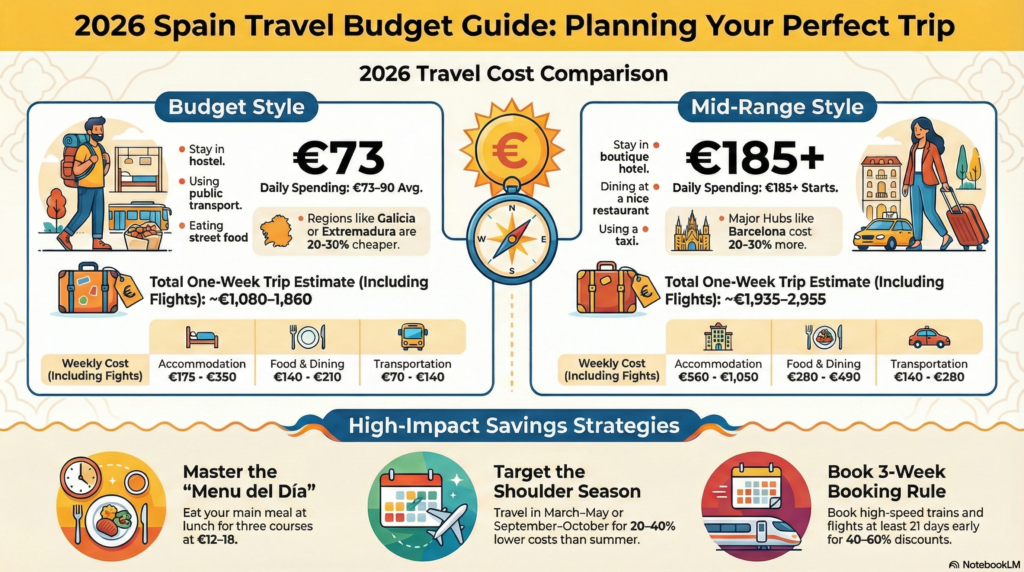
Daily Budget Overview by Travel Style
According to Budget Your Trip data compiled from thousands of real traveler expenses in 2026, typical daily costs in Spain break down as follows:
Budget Travel: €73-90 ($86-106) per day
- Hostel dormitories or basic guesthouses
- Menu del día lunches, market purchases, budget dinners
- Public transportation exclusively
- Selective museum visits, many free attractions
- Minimal nightlife expenses
Mid-Range Travel: €185-250 ($218-294) per day
- Three-star hotels or quality guesthouses
- Restaurant meals at local establishments
- Public transport with occasional taxis
- Comprehensive attraction access
- Moderate evening activities
Comfortable Travel: €350-470 ($412-553) per day
- Four-star hotels in prime locations
- Quality restaurant dining with wine
- Mix of public transport and private transfers
- Premium attraction experiences
- Regular evening entertainment
Luxury Travel: €600+ ($706+) per day
- Five-star hotels and boutique properties
- Fine dining and Michelin-starred restaurants
- Private drivers and transfers
- VIP experiences and exclusive tours
- Upscale nightlife and entertainment
These ranges represent per-person averages with significant variations based on specific cities, seasonal timing, and individual choices.
International Flight Costs
Flights from North America to Spain represent the largest single expense for most travelers in 2026.
From the United States:
- Round-trip economy flights: $500-1,500 depending on departure city and season
- East Coast departures (New York to Madrid): Approximately $700 average
- Peak season (July-August): $1,200-1,500
- Shoulder season (March-May, September-October): $600-900
- Low season (November-February, excluding holidays): $500-700
Budget Airlines Within Europe: European travelers access Spain via budget carriers including Ryanair, Vueling, and easyJet with fares from €20-80 when booked in advance, though baggage fees add €25-50 each direction.
Money-Saving Flight Strategies:
- Book 3+ weeks ahead for optimal pricing according to airline data
- Consider alternative Spanish airports (Valencia, Seville, Málaga) versus Barcelona or Madrid
- Search for one-way tickets on different airlines
- Travel during shoulder seasons for 30-50% lower fares
- Join flight deal services for mistake fares
Read: 7 Days Japan Itinerary with Budget (Full Cost Breakdown 2026)
Accommodation Costs by Category and Region

Spanish accommodation prices vary dramatically by city, category, and season according to 2026 booking platform data.
Budget Accommodation (€20-50 per night)
Hostel Dormitories:
- Madrid/Barcelona: €25-35 per person
- Seville/Granada/Valencia: €20-30 per person
- Smaller cities: €18-25 per person
Private Budget Hotel Rooms:
- Major cities: €40-70 for double rooms
- Secondary cities: €30-50 for double rooms
- Rural areas: €25-40 for double rooms
Airbnb Private Rooms:
- Major cities: €40-60 per night
- Smaller cities: €30-50 per night
Mid-Range Accommodation (€60-150 per night)
Three-Star Hotels:
- Madrid central: €80-150 per night
- Barcelona: €90-180 per night
- Seville/Granada: €60-120 per night
- Valencia/Bilbao: €70-130 per night
Quality Guesthouses/Pensiones:
- Historic centers: €70-110 per night
- Residential neighborhoods: €50-90 per night
Airbnb Entire Apartments:
- One-bedroom Barcelona/Madrid: €75-140 per night
- One-bedroom in smaller cities: €50-90 per night
Read: Cheapest Countries to Visit from USA (Full Budget Breakdown 2026)
Luxury Accommodation (€200-500+ per night)
Four-Star Hotels:
- Prime Barcelona/Madrid locations: €180-350 per night
- Costa del Sol resorts: €200-400 per night
- Historic properties Granada/Seville: €150-300 per night
Five-Star Hotels:
- Barcelona luxury properties: €300-600+ per night
- Madrid boutique hotels: €350-700+ per night
- Balearic Islands resorts: €400-800+ per night
Seasonal Price Variations
- Peak season (July-August, Easter, major festivals): 50-100% price increases
- Shoulder season (March-May, September-October): 20-30% below peak rates
- Low season (November-February, excluding Christmas): 40-60% discounts
Read: 25 + Top Cheap Weekend Getaways in the U.S. for 2026
Food and Dining Costs

Spanish dining offersan exceptional range from budget market meals to Michelin-starred experiences.
Budget Dining: €20-30 ($24-35) per day
Breakfast: €3-7
- Coffee and pastry at the bar: €2-4
- Café con leche and tostada: €3-5
- Market breakfast items: €4-8
Lunch (Menu del Día): €12-18 Spain’s greatest dining value features three-course lunches with bread, wine/water at local restaurants. This traditional offering provides complete meals at 30-50% below dinner pricing for identical dishes.
Dinner: €8-15
- Bocadillo sandwiches: €4-7
- Pizza by slice: €3-5
- Budget tapas bars: €2-4 per tapa
- Casual dinner with drinks: €12-20
Grocery Shopping: Supermarkets (Mercadona, Carrefour, Lidl) provide substantial savings:
- Fresh bread: €1-2
- Jamón: €15-25 per kilogram
- Cheese: €10-18 per kilogram
- Fruit: €2-4 per kilogram
- Wine: €4-10 per bottle
Mid-Range Dining: €40-70 ($47-82) per day
Breakfast: €5-12
- Hotel breakfast buffets: €8-15
- Café breakfast with pastries: €6-10
Lunch: €18-30
- Upscale menu del día: €15-22
- Mid-range restaurant: €20-35
Dinner: €25-40
- Traditional tapas bars: €25-40 per person with drinks
- Casual restaurant: €30-50 per person
- Local specialties: €20-35 per dish
Read: The 10 best Popular tourist places in Australia
Fine Dining: €80-150+ ($94-176+) per day
Upscale Restaurants:
- Quality establishments: €50-80 per person
- Michelin one-star: €80-120 per person
- Michelin multi-star: €150-300+ per person
Hidden Food Costs
Cubierto (Cover Charge): Some restaurants charge €1.50-3 per person, though this practice varies regionally and by establishment type.
Pan y Agua: Bread and water charges ranging from €1 to €2 per person appear at traditional restaurants.
IVA Tax: Value-added tax of 10% on restaurant meals is typically included in menu prices.
Transportation Costs Within Spain

Trains
Spain’s extensive rail network provides efficient intercity connectivity with 2026 pricing as follows:
High-Speed AVE Trains:
- Madrid to Barcelona: €60-180 depending on booking timing (2.5 hours)
- Madrid to Seville: €50-120 (2.5 hours)
- Madrid to Valencia: €40-100 (1.5 hours)
- Barcelona to Valencia: €30-80 (3 hours)
Regional Trains:
- Significantly cheaper but slower
- Madrid to Toledo: €12-18 (30 minutes)
- Barcelona to Girona: €15-25 (40 minutes)
Money-Saving Train Tips:
- Book high-speed trains 2-4 weeks ahead for 40-60% discounts
- Travel mid-week versus weekends for lower fares
- Consider slower regional trains for short distances
- Purchase multi-journey passes for frequent travelers
Read: 10 Most Breathtaking Places to Explore in Canada
Buses
Long-Distance Buses (ALSA, FlixBus):
- Madrid to Barcelona: €20-50 (7-8 hours)
- Madrid to Seville: €25-45 (6 hours)
- Barcelona to Valencia: €15-35 (4 hours)
Buses cost 40-60% less than trains, though they require significantly longer journey times.
City Public Transportation
Madrid:
- Single metro ticket: €1.50-2
- 10-journey ticket: €12.20
- Tourist pass (unlimited): €8.40 (1 day), €14.20 (2 days), €18.40 (3 days)
Barcelona:
- Single ticket: €2.40
- T-Casual 10-journey ticket: €11.35
- Hola Barcelona Travel Card: €16.30 (2 days), €23.70 (3 days)
Seville:
- Single ticket: €1.40
- 10-journey card: €7.50
- Day pass: €4.50
Rental Cars
Daily Rates:
- Economy car: €25-50 per day
- Mid-size car: €40-70 per day
- Insurance adds: €15-30 daily
- Fuel costs: Approximately €1.50-2 per liter
Parking:
- City center parking: €2-5 per hour, €25-40 daily
- Hotel parking: €20-35 per night in cities
Important Note: Rental cars excel for rural regions (Andalusian white villages, Basque countryside, Galicia) but prove impractical in Barcelona and Madrid, where parking costs €25-40 daily and excellent metro coverage makes cars unnecessary.
Read: 10 + Best UK Places to Visit for Your Next Adventure
Attraction and Museum Costs
Major Attractions Entry Fees (2026)

Barcelona:
- Sagrada Família: €26-36 (varies by access level)
- Park Güell: €10-13
- Casa Batlló: €35
- Picasso Museum: €14
Madrid:
- Prado Museum: €15
- Reina Sofía Museum: €12
- Royal Palace: €13-18
- Thyssen-Bornemisza Museum: €13
Seville:
- Alcázar: €14.50
- Cathedral and Giralda: €12
- Archive of the Indies: Free
Granada:
- Alhambra: €19.09-20 (advance booking essential, sells out weeks ahead)
Free Attractions
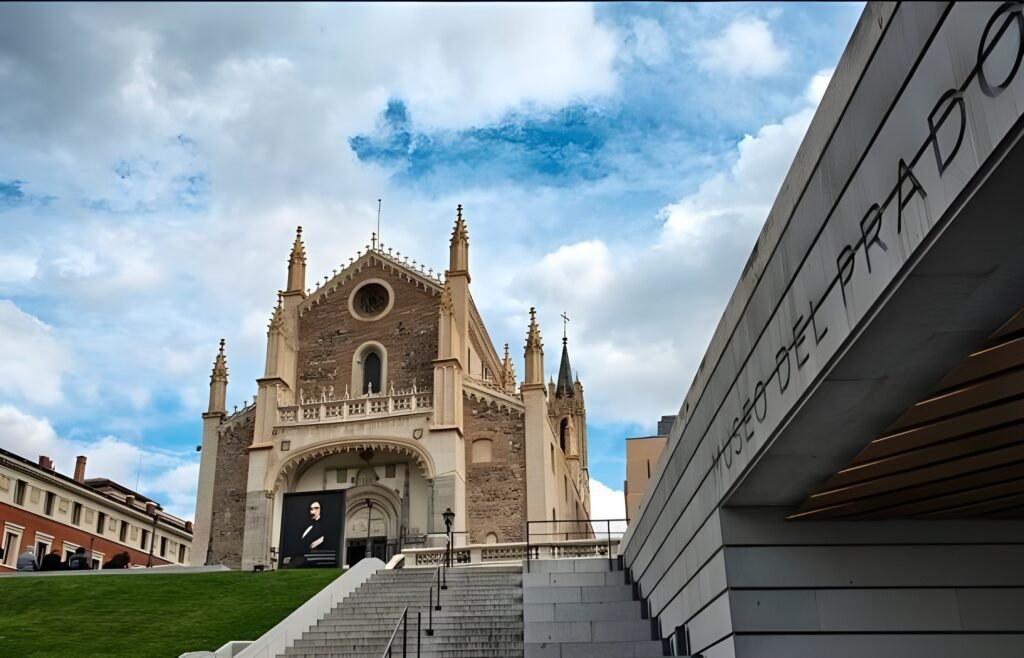
Many significant sites offer free entry:
- Madrid: Prado, Reina Sofía, Thyssen museums (specific afternoon hours)
- Barcelona: Gothic Quarter exploration, beaches
- Seville: Metropol Parasol, Plaza de España, riverside walks
- Throughout Spain: Most churches, many plazas, and parks
Free Museum Days: The first Sunday of each month provides free state museum entry at Prado, Reina Sofía, and other institutions.
Read: Planning a Europe Trip? Try These Unforgettable Day Trips From Luxembourg
Regional Price Variations
According to the comprehensive 2026 cost analysis, significant regional price differences exist:
Most Expensive Cities:
- Barcelona: 20-30% above the national average
- Madrid: 15-25% above average
- Ibiza/Mallorca summer season: 30-50% above average
Moderate Pricing:
- Seville, Granada, Valencia, Bilbao: Near national average
- Coastal cities (Málaga, San Sebastián): 10-20% above average
Budget-Friendly Regions:
- Andalusian smaller cities: 25-40% below Barcelona/Madrid
- Galicia (Santiago, A Coruña): 20-30% below major tourist centers
- Extremadura (Cáceres, Mérida): 30-40% below average
- Northern smaller cities: 20-35% below Barcelona/Madrid
Complete Trip Budget Examples
One-Week Budget Spain Trip (Per Person)
| Category | Cost (EUR) | Cost (USD) |
|---|---|---|
| Food (7-day budget) | €600 | $706 |
| Accommodation (7 nights hostel/budget) | €175-350 | $206-412 |
| Food (7 days budget) | €140-210 | $165-247 |
| Transportation (trains/local) | €70-140 | $82-165 |
| Attractions (selective visits) | €35-70 | $41-82 |
| Miscellaneous (10-15%) | €60-90 | $71-106 |
| Total One-Week Budget Trip | €1,080-1,860 | $1,271-2,188 |
One-Week Mid-Range Spain Trip (Per Person)
| Category | Cost (EUR) | Cost (USD) |
|---|---|---|
| Round-trip flights | €750 | $882 |
| Accommodation (7 nights 3-star) | €560-1,050 | $659-1,236 |
| Food (7 days mid-range) | €280-490 | $330-577 |
| Transportation (high-speed trains) | €140-280 | $165-330 |
| Attractions (comprehensive) | €105-210 | $124-247 |
| Miscellaneous | €100-175 | $118-206 |
| Total One-Week Mid-Range Trip | €1,935-2,955 | $2,278-3,478 |
Money-Saving Strategies
- Embrace Menu del Día Culture: Lunch specials at €12-18 provide three courses with wine, creating €15-25 daily savings over dinner pricing for identical dishes.
- Book Accommodation 2-3 Months Ahead: Early booking secures 20-40% better rates versus last-minute reservations, especially crucial during peak summer months and major festivals.
- Travel During Shoulder Seasons: March-May and September-October deliver pleasant weather with 20-40% lower costs across flights, accommodation, and attractions compared to July-August peaks.
- Use Public Transportation: Metro systems in Madrid, Barcelona, and Seville cost €1.40-2.40 per journey versus €15-30 for taxis for equivalent routes. Multi-day passes provide additional savings.
- Shop at Markets and Supermarkets: Fresh produce, cheese, bread, jamón, and wine from markets and supermarkets enable picnic meals at 60-70% below restaurant costs.
- Take Advantage of Free Museum Hours: Major museums offer free entry on specific afternoons weekly, plus the first Sunday of the month, generating €10-15 savings per attraction.
- Stay Outside Tourist Centers: Accommodations in residential neighborhoods cost 20-35% less than historic centers while maintaining excellent metro access to major attractions.
- Avoid Peak Season Travel: July-August and Easter see 50-100% accommodation price increases. January-February and June offer 40-60% lower costs.
Read: Best Place Where to Travel in Colombia in This Year ?
Frequently Asked Questions
How much does a one-week trip to Spain cost?
According to comprehensive 2026 traveler data, one-week Spain trips cost approximately €1,080-1,860 ($1,271-2,188) for budget travelers, €1,935-2,955 ($2,278-3,478) for mid-range visitors, and €3,500+ ($4,118+) for comfortable-to-luxury experiences per person, including international flights. Budget totals assume hostel accommodation, menu del día lunches, public transportation, and selective attraction visits. Mid-range costs include three-star hotels, regular restaurant meals, high-speed trains, and comprehensive museum access.
Is Spain expensive for American tourists?
Spain costs moderately compared to other Western European destinations – generally less expensive than France, Germany, or the United Kingdom but more costly than Portugal or Eastern Europe, according to 2026 pricing analysis. Daily costs of €73-185 ($86-218) per person remain manageable through strategic planning, including shoulder-season travel, budget accommodation, menu del día dining, public transportation, and free attraction emphasis. Spain delivers exceptional value, particularly outside Barcelona and Madrid.
What is menu del día, and why does it save money?
Menu del día represents Spain’s traditional lunch special, offering three courses (starter, main, dessert) plus bread and wine/water for fixed prices of €12-18 at local restaurants. This cultural practice provides complete restaurant meals at 30-50% below dinner pricing for identical dishes, creating €15-25 daily savings for travelers. Menu del día availability typically runs Monday-Friday lunch hours (1-4 PM) at neighborhood restaurants.
How much money should I bring to Spain for one week?
Budget travelers need approximately €500-800 ($590-941) for a comfortable one-week Spain experiences excluding pre-paid accommodation and flights. Mid-range travelers should allocate €800-1,400 ($941-1,648) for dining, transportation, attractions, and miscellaneous expenses. These amounts assume credit cards for major purchases with cash for markets, tapas bars, small restaurants, and tips. Withdraw larger cash amounts less frequently to minimize ATM fees (typically €3-5 per transaction).
Are meals expensive in Spain?
Spanish meals span dramatic price ranges from budget-friendly to expensive according to 2026 dining data. Budget travelers manage €20-30 daily through market purchases, menu del día lunches (€12-18), and casual tapas dinners. Mid-range diners spend €40-70 daily at traditional restaurants and upscale tapas bars. Fine dining costs €80-150+ per person. Cover charges add €1.50-3 per person at some restaurants. Menu del día lunch specials deliver the best value.
When is the cheapest time to visit Spain?
November through February (excluding Christmas/New Year periods) represents Spain’s cheapest travel period with accommodation discounts of 40-60% compared to summer peaks, according to hotel pricing data. However, shorter daylight hours and cool weather present tradeoffs. March-May and September-October shoulder seasons providean optimal balance between pleasant weather and 20-40% savings versus July-August peaks while maintaining comfortable temperatures and full attraction schedules.
Should I rent a car in Spain?
Car rentals suit rural regions, including Andalusian white villages, Basque countryside, and Galician coast, but prove impractical in Barcelona and Madrid, where parking costs €25-40 daily, and excellent metro coverage makes cars unnecessary according to transportation analysis. Optimal strategy: use trains and buses for city-to-city travel, and rent cars only for countryside exploration periods. Daily rental rates start at €25-50 plus fuel at €1.50-2 per liter.
How much do trains cost between Spanish cities?
High-speed AVE trains cost €40-180 depending on route and booking timing in 2026. Madrid-Barcelona costs €60-180 (2.5 hours), Madrid-Seville €50-120 (2.5 hours), and Madrid-Valencia €40-100 (1.5 hours). Booking 2-4 weeks ahead secures 40-60% discounts versus last-minute purchases. Regional trains cost significantly less, though require longer journey times. Budget long-distance buses provide alternatives at 40-60% below train pricing.
Summary: Spain travel costs in 2026 range from approximately €1,080-1,860 ($1,271-2,188) for week-long budget trips to €1,935-2,955 ($2,278-3,478) for mid-range experiences and €3,500+ ($4,118+) for comfortable travel per person, including international flights. Daily expenses average €73-185 ($86-218) depending on accommodation choices (€20-150 nightly), dining preferences (€20-70 daily), transportation selections (trains versus buses), and attraction priorities.
Regional price variations significantly impact budgets with Andalusian smaller cities, Galicia, and Extremadura costing 25-40% less than Barcelona and Madrid. Seasonal timing proves crucial as the July-August peak summer commands 50-100% premium pricing across accommodation and flights compared to shoulder seasons (March-May, September-October) offering 20-40% savings with comparable weather.
Strategic money-saving approaches, including 2-3 month advance booking, shoulder-season travel, menu del día lunch emphasis (€12-18 for three courses versus €30-50 dinner pricing), public transportation usage, market shopping, and free museum hours, reduce total trip costs by 40-50% while maintaining authentic Spanish experiences.
Hidden costs, including occasional cover charges (€1.50-3), ATM fees (€3-5 per transaction), city tourist taxes (€0.50-3 per night), and parking in cities (€25-40 daily for rental cars), add 10-20% to base budgets requiring comprehensive planning for accurate financial expectations.
Whether seeking budget hostel stays with tapas bars or comfortable boutique hotels with quality dining, Spain accommodates diverse budgets while delivering world-class art, architecture, cuisine, and cultural immersion, justifying visit costs for travelers in 2026.
Disclaimer: This guide is based on publicly available tourism data, official travel resources, and general cost estimates current as of 2026. Prices and rules may vary depending on season and traveler profile. Hotel costs fluctuate dramatically between peak seasons (July-August, Easter, major festivals including Las Fallas, Semana Santa, San Fermín) and low seasons (November-February, excluding Christmas), with variations of 40-100% common. Flight prices change constantly based on departure cities, airlines, booking timing, and seasonal demand. Menu del día availability and pricing vary by restaurant, city, and day of the week, with many establishments offering lunch specials Monday-Friday only. Train pricing depends heavily on the timing of advance booking, with last-minute tickets costing 50-100% more than advance-purchase fares.
Museum fees are subject to periodic increases, with free admission hours varying by institution and day. Regional price variations between Barcelona/Madrid (highest) and smaller Andalusian/Galician cities (lowest) create 25-40% cost differences. Exchange rates between USD/EUR fluctuate daily, impacting actual costs. The €2 metro fare in Madrid and €2.40 in Barcelona represent 2026 single-journey base rates subject to zone adjustments. Always verify current pricing, museum hours, attraction availability, and entry requirements through official sources including Renfe.com for trains, individual museum websites, and recent traveler reports, before finalizing travel plans. This article provides informational guidance only and does not constitute official travel or financial advice.