
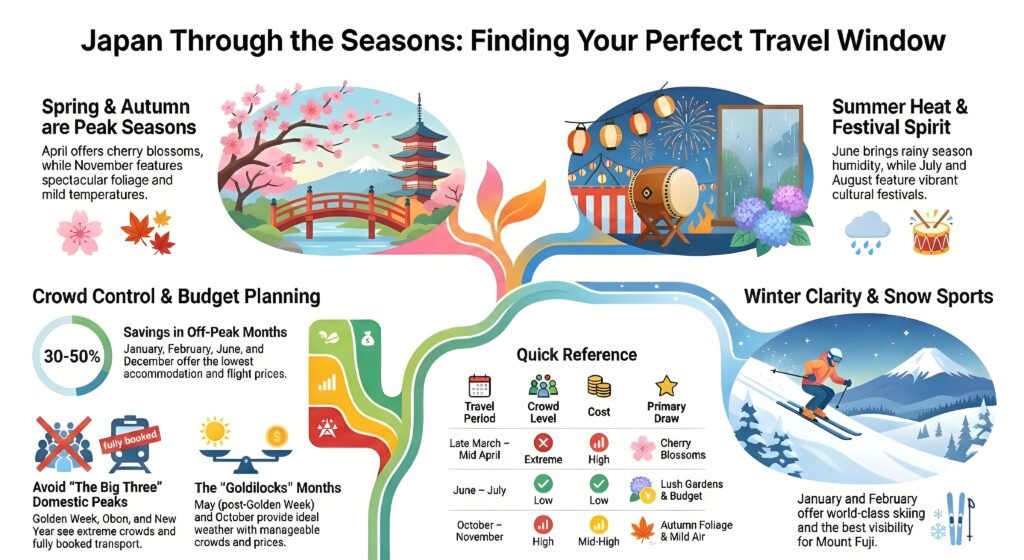
Determining the best time to visit Japan requires understanding how the country’s distinct seasons and regional climate variations create dramatically different travel experiences throughout the year. According to tourism data and weather patterns, Japan offers compelling attractions during every season, though spring and autumn traditionally represent peak periods for international visitors seeking optimal weather conditions and natural beauty.
Japan’s geographical span from subtropical Okinawa in the south to temperate Hokkaido in the north creates significant regional variations in climate, seasonal timing, and weather patterns. This comprehensive Japan travel season guide examines month-by-month conditions to help travelers select ideal visit times based on personal preferences, budget considerations, and desired experiences.

- Understanding Japan's Seasonal Framework
- Peak Tourist Seasons and Crowd Management
- January: Winter Clarity and Snow Sports
- February: Peak Winter Conditions
- March: Spring's Gradual Arrival
- April: Cherry Blossom Peak Season
- May: Post-Golden Week Comfort
- June: Rainy Season Challenges
- July: Summer Heat and Festival Season
- August: Peak Summer Heat
- September: Autumn's Gradual Approach
- October: Ideal Autumn Conditions
- November: Peak Autumn Foliage
- December: Winter's Arrival
- Regional Climate Variations
- Weather and Packing Considerations
- Budget Considerations by Season
- Transportation Planning
Understanding Japan’s Seasonal Framework
Japan experiences four distinct seasons, each offering unique characteristics that appeal to different traveler preferences. The best time to visit Japan depends heavily on whether travelers prioritize cherry blossoms, autumn foliage, snow activities, summer festivals, weather conditions, crowd levels, or budget considerations.
Spring typically spans March through May, bringing mild temperatures, cherry blossoms, and vibrant spring festivals. Summer extends from June through August with hot, humid conditions, rainy season challenges, and colorful matsuri celebrations. Autumn runs from September through November, delivering comfortable temperatures, spectacular fall foliage, and clear skies. Winter covers December through February with cold weather, excellent snow conditions in northern regions, and fewer crowds.
Read: 3 Days Netherlands trip for First-Time Travelers
Peak Tourist Seasons and Crowd Management
Based on publicly available travel information, Japan experiences three major peak travel periods that significantly impact accommodation availability, transportation capacity, and pricing. Cherry blossom season, from late March through early April, represents the busiest international tourism period, with hotels in popular cities booking out months in advance.
Golden Week, running April 29 through May 6 in 2026, combines multiple national holidays into Japan’s busiest domestic travel period. The eight-day holiday period sees intensive travel activity, fully reserved Shinkansen seats, and crowded attractions throughout the country. Obon, typically August 13-16, represents another major domestic travel season when Japanese families return to hometowns for ancestral observances.
The New Year period, from approximately December 28 through January 5, involves significant domestic travel, with many businesses closed for several days. These peak periods require advance planning, higher budgets, and tolerance for crowds, though they offer unique cultural experiences and festive atmospheres.
January: Winter Clarity and Snow Sports

January represents one of Japan’s coldest months, with temperatures typically ranging from -4°C to 10°C depending on location. According to weather data, January provides generally sunny, dry conditions throughout most regions except northern areas and the Sea of Japan coast, which receives substantial snowfall.
The month offers excellent conditions for winter sports enthusiasts, with Hokkaido ski resorts experiencing peak snow quality. The Sapporo Snow Festival, one of the world’s most famous winter celebrations, showcases incredible ice sculptures and illuminations typically in early February. Northern Japan and mountainous regions like Shirakawa-go present breathtaking winter scenery with heavy snow coverage.
Travel advantages include relatively low tourist crowds except during New Year’s week and around the Chinese New Year. Accommodation prices remain moderate outside holiday periods. The downside involves short daylight hours with sunset around 5:00 PM in Tokyo and barren vegetation in most areas. Many Japanese observe hatsumode, the tradition of visiting shrines and temples for New Year’s blessings, creating atmospheric cultural experiences.
read: Thailand Travel Cost Breakdown for 7 Days (2026 Guide)
February: Peak Winter Conditions
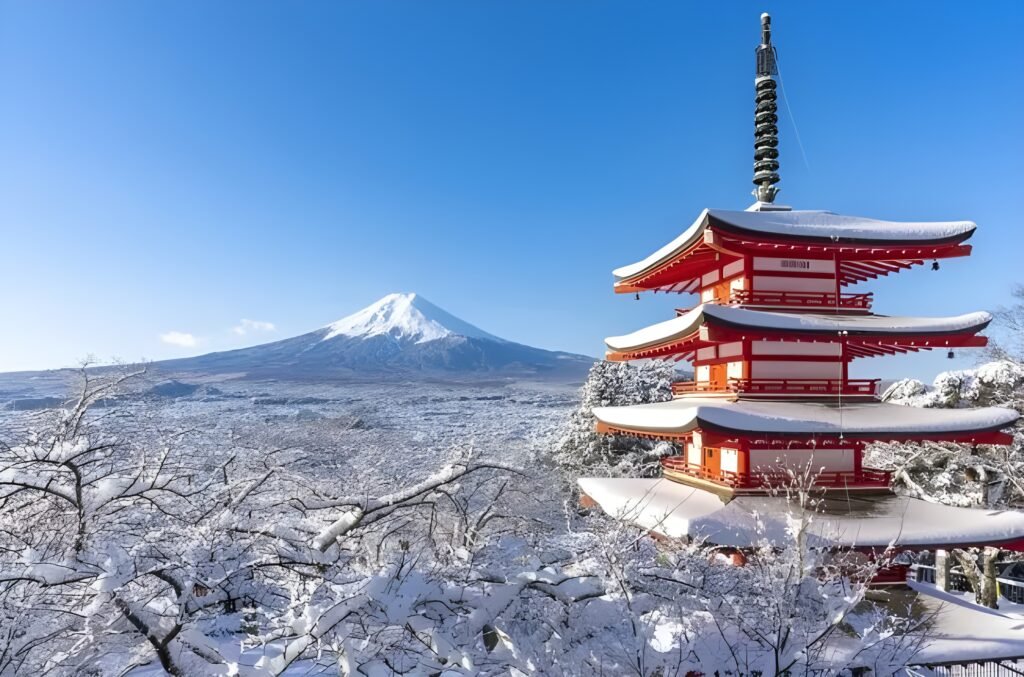
February continues January’s cold, dry weather patterns with similar temperature ranges. Tourism data indicate this month represents one of the best times for winter sports, viewing drift ice off Hokkaido, and experiencing snow-covered landscapes like Shirakawago’s traditional farmhouses.
The month maintains low tourist crowds except during the Chinese New Year period, creating comfortable sightseeing conditions in major cities. Early flowering plants like plum blossoms deliver the season’s first spring signs. Mount Fuji viewing conditions improve with clear February skies, as the typically shy peak becomes more visible.
Northern Japan maintains excellent skiing and snowboarding conditions throughout February. Hot spring resorts provide particularly appealing experiences when surrounded by snowy landscapes. The weather remains predominantly sunny and dry in central and southern regions, though temperatures stay cold and vegetation remains dormant.
Read: Singapore Travel Budget for Couples (Daily Cost Explained)
March: Spring’s Gradual Arrival
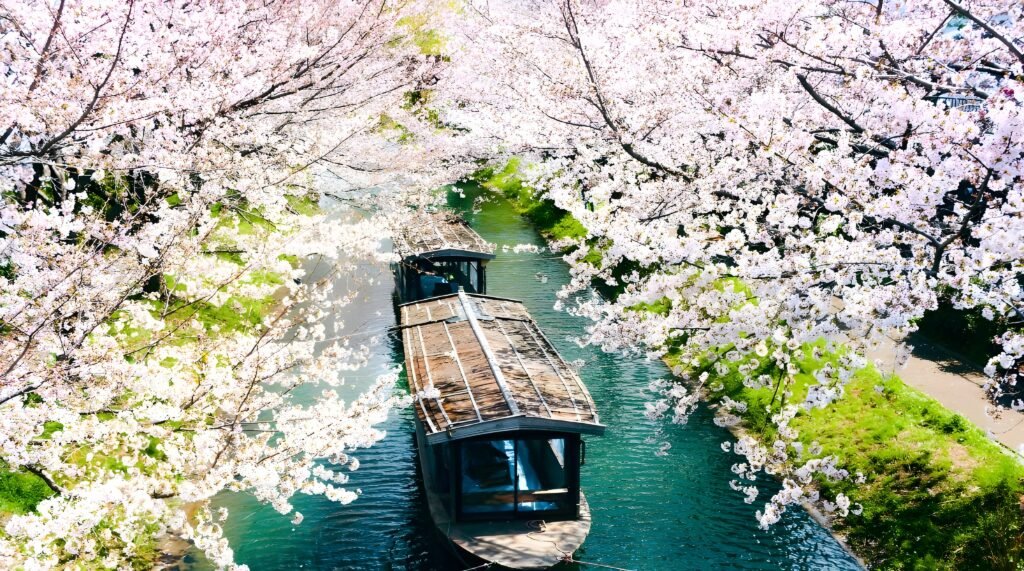
March marks the transition from winter to spring, with noticeably milder weather as the month progresses. Temperatures gradually rise, and early flowering trees, including plum blossom,s reach peak bloom. According to recent forecasts, the cherry blossom season begins in certain regions toward late March, with southern areas experiencing the first blooms.
Based on the 2026 cherry blossom forecast from Japan Meteorological Corporation, Tokyo’s cherry blossoms are expected to begin flowering around March 20-22, with Kyoto and Osaka following around March 25. Full bloom typically occurs approximately one week after first flowering, creating spectacular viewing conditions in late March.
Domestic travel activity increases significantly in the second half of March due to the spring school holidays. Northern regions, including parts of Nagan, often maintain good winter sports conditions through March. The weather becomes pleasantly mild, though evenings remain cool, requiring layered clothing.
Travelers visiting late March benefit from early cherry blossom viewing opportunities before peak international tourist arrivals in early April. Accommodation should be secured well in advance, particularly for late March dates, as the cherry blossom season approaches.
Read: Why the Cayman Islands Are Most Beautiful Escapes One of the Caribbean’s
April: Cherry Blossom Peak Season
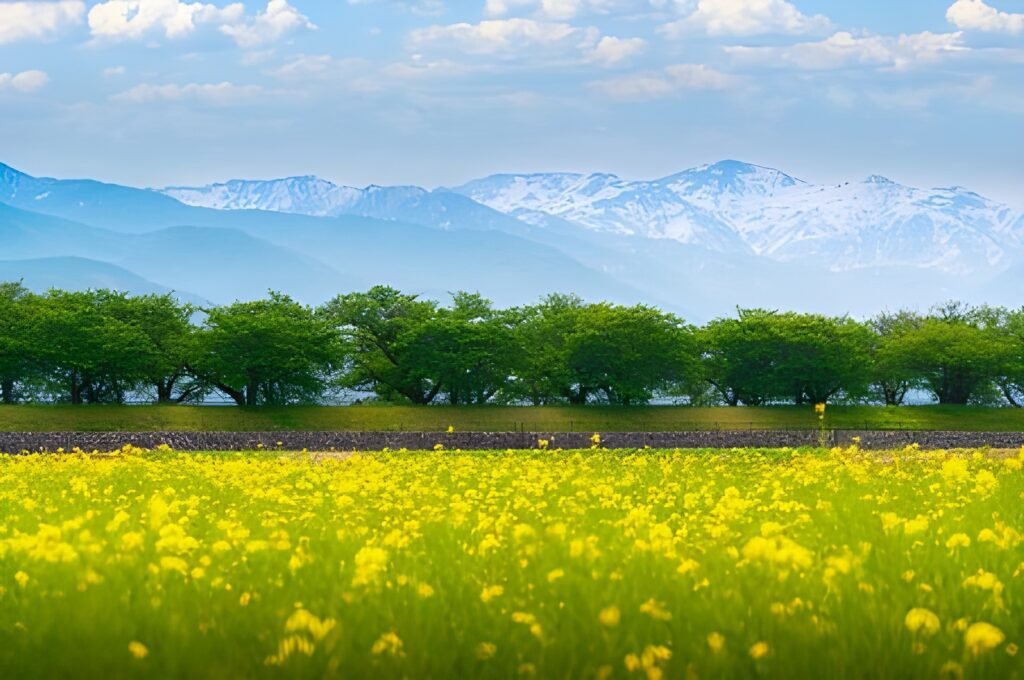
April represents the best time to visit Japan for cherry blossoms and ranks among the country’s most popular tourism months. According to tourism data, cherry blossoms reach full bloom across most central regions from late March through early April, creating spectacular natural displays that last approximately one week in each location.
Based on 2026 forecasts, Tokyo’s cherry blossoms are expected to reach peak bloom around March 27-30, while Kyoto and Osaka peak around April 1-2. The fleeting nature of cherry blossoms, combined with weather sensitivity, means exact timing varies annually and careful planning proves essential.
Weather conditions in April typically provide mild temperatures around 16°C to 23°C with pleasant, comfortable days. The vegetation becomes lush and green following winter dormancy. However, April coincides with heavy domestic and international tourism, creating crowded conditions at popular viewing spots, transportation hubs, and accommodations.
Golden Week begins April 29, intensifying crowds and travel challenges. Early April, before Golden Week,k represents the optimal window for comfortable cherry blossom viewing with fewer crowds than late April. Pollen allergies affect sensitive individuals during April, particularly from cedar and cypress trees.
Travelers should book accommodations 2-3 months in advance minimum, for April, particularly for Kyoto,o where popular hotels often sell out 6-8 months ahead during cherry blossom season. Alternative destinations like the Fuji Five Lakes, Takayama, or Kanazawa offer beautiful cherry blossoms with slightly fewer crowds around April 10.
Read: Best Places in China to Visit That Will Completely Surprise You
May: Post-Golden Week Comfort
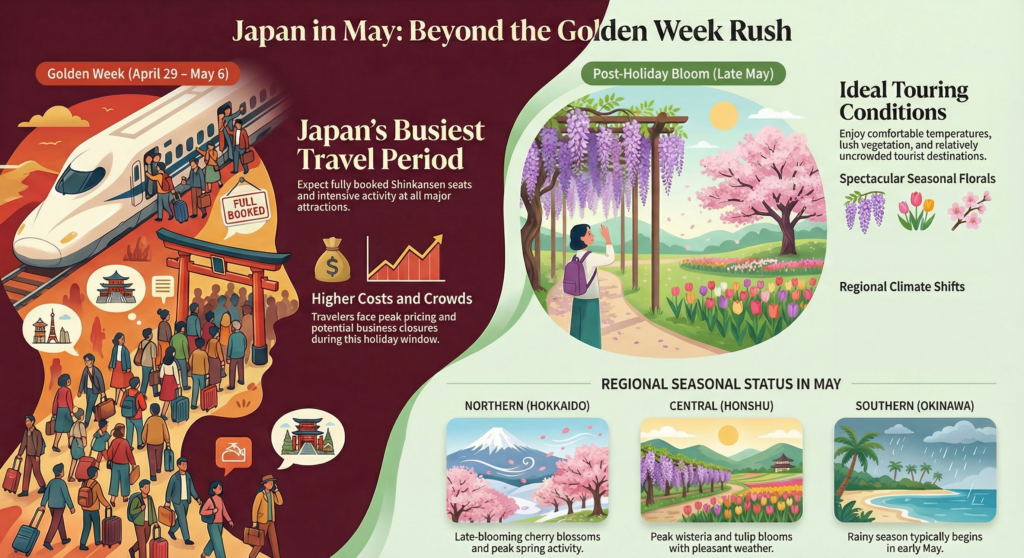
May generally represents one of the best times for visiting Japan outside the Golden Week holiday period (April 29-May 6). According to travel data, the remainder of May after Golden Week ends provides comfortable temperatures, lush vegetation, and relatively uncrowded tourist spots.
Late-blooming cherry blossoms remain visible in northern regions, including Hokkaido, through May. Wisteria flowers reach spectacular bloom at locations like Ashikaga, while tulip fields in Tonami and flower parks in Hitachi add seasonal color. The weather remains pleasant with temperatures typically comfortable for outdoor activities.
In Hokkaido, spring progresses approximately one month compared to Tokyo, making May an excellent time for experiencing Hokkaido’s spring season. At the opposite end of the country, Okinawa’s rainy season typically begins in early May, lasting through mid-June.
Golden Week (April 29-May 6, 2026) represents Japan’s busiest domestic travel period, with intensive activity on all transportation and at major attractions. Travelers visiting during Golden Week should expect fully booked Shinkansen seats, crowded destinations, higher prices, and potential business closures. Planning well in advance and maintaining schedule flexibility becomes essential during this period.
Read: 10 Best Places in the Dominican Republic You Have to Experience Yourself
June: Rainy Season Challenges

From early June, the rainy season known as tsuyu or baiu visits most parts of Japan except Hokkaido. According to meteorological data, the rainy season typically lasts from the beginning of June to mid-July in most regions, though Okinawa experiences it from early May to mid-June.
The rainy season does not bring continuous rainfall every day. Weather data indicates the probability of rain on a given Tokyo day during peak rainy season reaches approximately 45 percent, while sunny weather probability sits around 27 percent. Rainfall typically arrives as intermittent showers rather than all-day downpours, with temperatures ranging from 22°C to 28°C.
High humidity characterizes this period, creating sticky, heavy air conditions. The duration and intensity of the rainy season vary considerably year to year. Despite weather challenges, June offers several advantages, including significantly lower tourist crowds, reduced accommodation prices, and atmospheric temple and garden visits enhanced by rain.
Hot spring resorts like Hakone and wooded temple mountains like Koyasan provide particularly attractive rainy weather destinations. Hokkaido largely avoids the rainy season, making it an ideal June destination with pleasant weather and outdoor activities. Hydrangeas bloom throughout June, creating beautiful displays at temples, gardens, and parks across the country.
Read: Top 10 Destinations in Israel You Must Visit at Least Once
July: Summer Heat and Festival Season
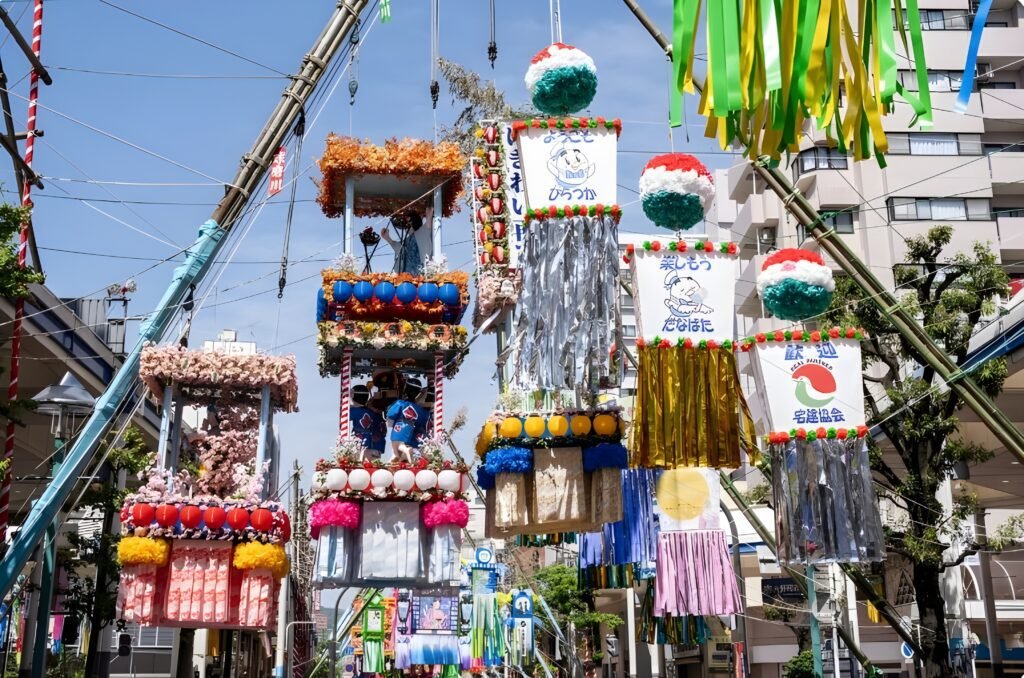
The rainy season typically ends in the first half of July for most regions. Following tsuyu’s conclusion, July brings hot, humid conditions with temperatures reaching 26°C-30°C or higher. Standing outdoors can induce sweating even without physical activity.
Conditions prove more comfortable in higher elevations and Hokkaido, which becomes highly popular among outdoor enthusiasts during the summer months. Mount Fuji’s official climbing season opens in early July, running through early September. This represents the only period when mountain huts operate, and routes receive full maintenance.
Many local festivals and fireworks displays occur throughout July. Cormorant fishing demonstrations operate during this period. Beach holidays in Okinawa become particularly appealing as the rainy season concludes and the weather dramatically improves. Summer school holidays begin in late July, increasing domestic travel activity considerably.
The typhoon season reaches its early stages in July, though peak intensity occurs later in August and September. Typhoons typically affect southern coastal regions including Okinawa, Kyushu, and Shikoku, causing concentrated heavy rainfall for approximately two days before often being followed by excellent weather.
Read: Top Attractions in Kuwait You Can’t Miss in 2026
August: Peak Summer Heat

August continues July’s hot, humid conditions throughout most of Japan. Temperatures remain high with significant humidity. Higher elevations and Hokkaido provide more comfortable alternatives, attracting outdoor lovers seeking relief from lowland heat.
Obon, typically August 13-16, represents one of Japan’s three major travel seasons with intensive domestic and international travel activity. Many Japanese return to their hometowns during this period, creating heavy transportation demand and crowded conditions at popular destinations. Some private stores and restaurants close for rest during Obon.
The typhoon season peaks in August and September. According to meteorological patterns, Japan experiences zero to two typhoons monthly from July through October. Typhoons bring strong winds and concentrated rainfall, typically lasting one to two days, though they often precede periods of excellent clear weather.
Despite heat and humidity, August offers vibrant summer festivals, excellent beach conditions in Okinawa, mountain hiking opportunities, and coastal activities. Festival atmosphere pervades many regions with colorful matsuri celebrations, traditional performances, and firework displays.
Read: Top Places Visit in Malaysia Before It Becomes Overcrowded
September: Autumn’s Gradual Approach
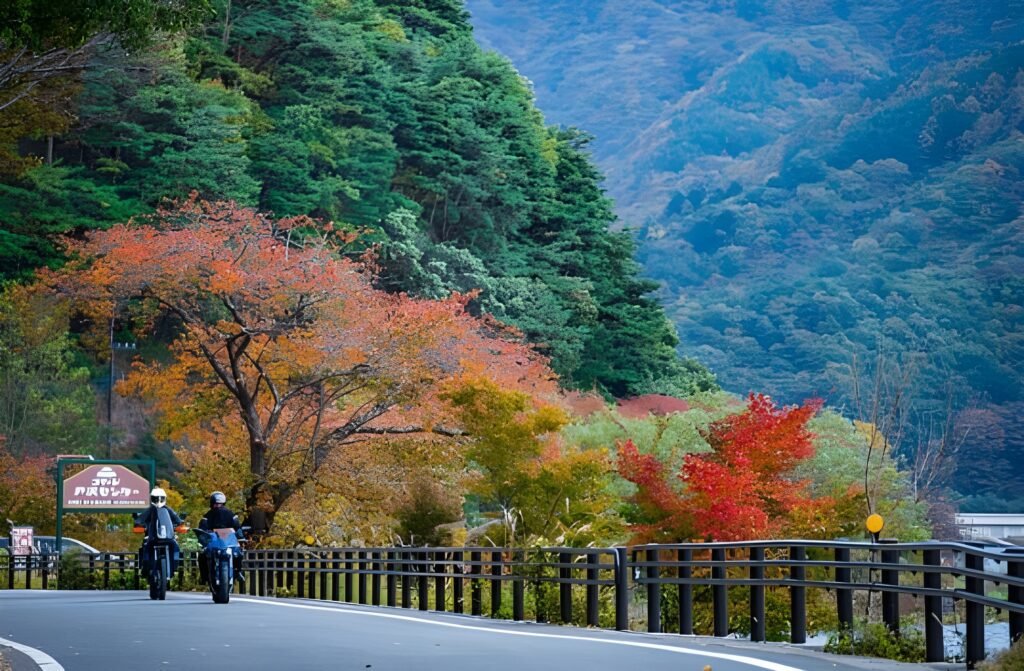
September weather can still feel hot and humid, particularly early in the month, though conditions gradually improve as autumn approaches. The typhoon season continues with September representing peak typhoon activity alongside August. Tourist crowds diminish considerably compared to the summer months.
Late September marks the beginning of the autumn foliage season in northern Hokkaido and higher elevations. According to autumn leaves forecasts, the color change progresses gradually southward throughout autumn. Early fall colors appear in mountainous regions while lowland areas maintain green vegetation.
September offers pleasant shoulder-season advantages, including moderate temperatures, fewer crowds at popular attractions, and good availability for accommodations. The transition period between summer and autumn creates comfortable travel conditions in many regions.
Silver Week, a rare holiday period similar to Golden Week, occurs in September 2026 from September 19-23, creating a five-day holiday through favorable calendar alignment. This represents the next significant Silver Week following years without this extended break. Domestic travel activity increases during this period.
Read: Top Must-Visit Places in Nigeria for First-Time Visitors
October: Ideal Autumn Conditions
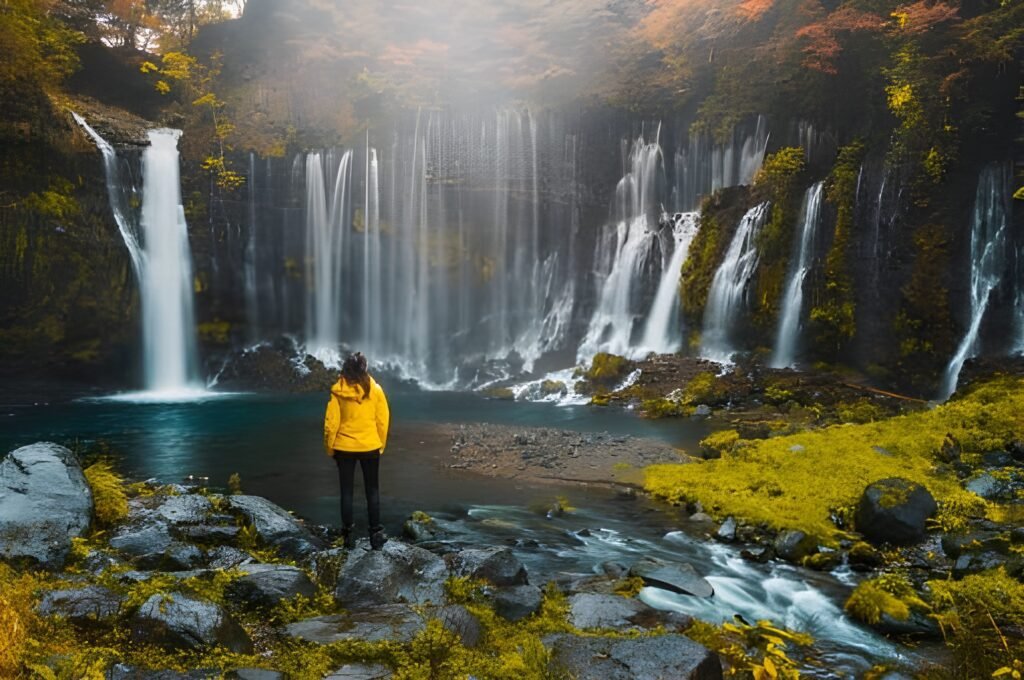
October ranks among the most pleasant months for traveling in Japan, according to tourism data. The weather remains warm without excessive heat and humidity. Trees begin changing colors in northern regions and higher elevations, creating early autumn foliage displays.
Temperatures typically range from 7°C to 23°C, depending on location and time of month. The air becomes noticeably crisp and clear, with comfortable daytime conditions and cool evenings. The typhoon season continues into October, though intensity generally decreases compared to August and September peaks.
Autumn foliage viewing, known as koyo, begins in earnest during October for northern Japan and mountainous areas. Daisetsuzan National Park in Hokkaido and highland regions including Shiga Kogen, Tateyama-Kurobe, Kamikochi, and Togakushi, reach peak colors in late October.
Halloween decorations and themed events appear at locations like Tokyo Disneyland during October. The comfortable weather conditions make October excellent for outdoor activities, hiking, and extended sightseeing without weather concerns. Tourist activity remains relatively moderate except around popular autumn foliage destinations.
Read: 25 + Top Cheap Weekend Getaways in the U.S. for 2026
November: Peak Autumn Foliage
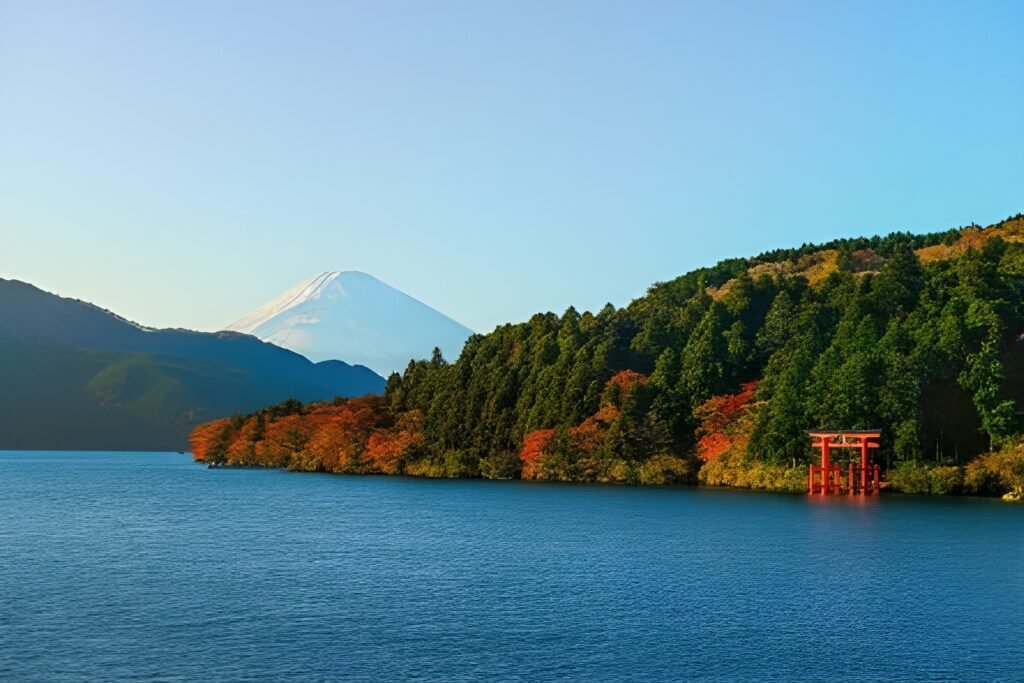
November represents one of the best times to visit Japan, according to multiple tourism sources. The weather remains relatively dry and mild with comfortable temperatures. Autumn colors reach spectacular peak across many parts of the country, particularly in Kyoto, Tokyo, and surrounding regions.
Based on 2025 autumn foliage forecasts, Tokyo’s yellow ginkgo leaves typically peak around late November (approximately November 27), while red maple leaves peak in early December (approximately December 2). Kyoto’s foliage peaks slightly later, with yellow leaves around November 30 and red leaves around mid-December.
The progression of autumn colors from north to south means November provides excellent viewing opportunities across multiple regions. Early November sees Tohoku at peak colors, mid-November brings spectacular displays to Tokyo and central Japan, and late November highlights Kyoto, Nara, and Osaka at their most beautiful.
Travel activity tends to be relatively low except around famous autumn foliage spots, which can experience crowds during peak color weekends. The dry weather, comfortable temperatures, and stunning natural displays make November highly appealing for photography enthusiasts and nature lovers. Advance accommodation booking remains advisable, particularly in Kyoto during peak foliage periods.
December: Winter’s Arrival
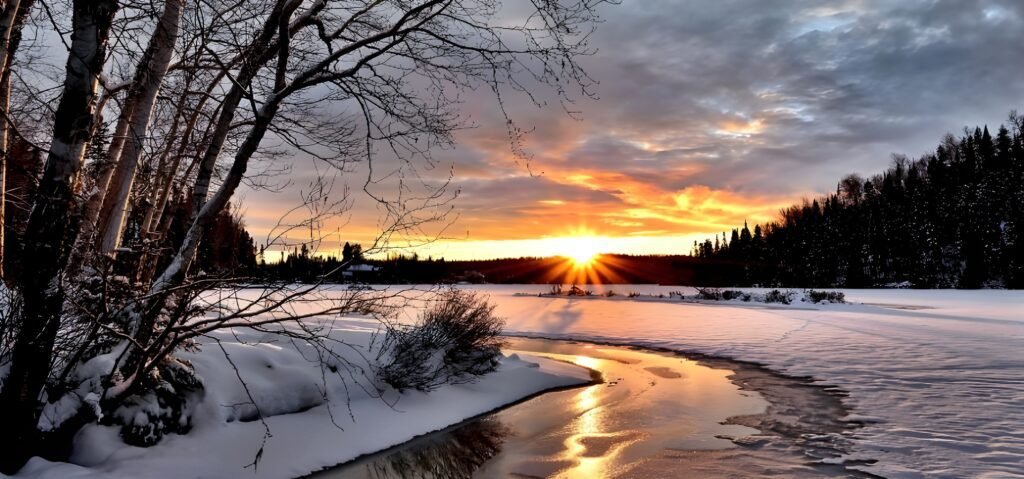
December brings good travel conditions thanks to generally dry weather. Temperatures cool considerably as winter establishes itself, though conditions vary significantly by region. Northern areas and mountainous regions experience snowfall and cold temperatures, while southern regions maintain milder conditions.
Autumn foliage extends into early December in some southern regions and lower elevations. Winter illuminations begin appearing throughout Japan, with commercial and business districts celebrating the season by adorning plazas and courtyards with brilliant, festive lights. These illumination displays create magical evening atmospheres perfect for enjoying while sipping hot sake.
December represents a quieter tourism period for much of the month, offering good availability and moderate pricing. The exception occurs during the final week approaching New Year, when domestic travel activity increases significantly. Many shops, restaurants, and attractions close for at least one day between December 29 and January 4.
Ski season begins in northern regions and mountainous areas, with early season conditions developing throughout December. The combination of winter illuminations, early snow, quieter crowds, and festive atmosphere makes December appealing for travelers seeking atmospheric winter experiences without peak-season challenges.
Regional Climate Variations
Japan’s north-south geographical extent creates substantial regional differences affecting optimal visit timing. Hokkaido experiences significantly colder conditions with heavy winter snowfall, spring arriving approximately one month later than Tokyo, and cooler summer temperatures providing comfortable alternatives to lowland heat.
Okinawa maintains subtropical climate patterns with the rainy season arriving one month earlier than mainland Japan (early May to mid-June), warm conditions year-round suitable for beach activities, and typhoons affecting the region more frequently during peak season.
The Sea of Japan coast receives substantially more snow than the Pacific coast regions during winter. Central Honshu cities, including Tokyo, Kyoto, and Osak,a experience similar seasonal patterns with variations of only a few days to weeks. Mountainous regions display autumn foliage and spring blooms later than nearby lowland areas due to elevation effects.
Weather and Packing Considerations
Spring months (March-May) require layered clothing as temperatures fluctuate between cool mornings and warm afternoons. Light jackets, long sleeves, and comfortable walking shoes prove essential. Pollen allergies affect many visitors during spring, particularly in April.
Summer months (June-August) demand light, breathable fabrics, sun protection, umbrellas for the rainy season, and preparation for high humidity. Air conditioning operates extensively indoors, so carrying a light layer helps with temperature transitions. Insect repellent proves useful for outdoor activities.
Autumn months (September-November) benefit from layered clothing similar to spring, with warmer layers becoming increasingly important as November approaches. Comfortable walking shoes remain essential for exploring parks and gardens during foliage season. Evenings grow progressively cooler, requiring jackets or sweaters.
Winter months (December-February) necessitate warm coats, thermal layers, waterproof boots in snowy regions, gloves, hats, and scarves. Indoor heating can be intense, making layered clothing practical. Northern regions and mountainous areas require winter-grade outerwear and snow-appropriate footwear.
Budget Considerations by Season
Peak seasons, including the cherry blossom period (late March-early April), Golden Week (late April-early May), summer holidays (late July-August), and autumn foliage season (November), command premium pricing for accommodations, with some hotels charging 50-100 percent more than off-peak rates.
Off-peak periods, including January-February (excluding New Year), June (rainy season), and December (excluding year-end) offer the best value for budget-conscious travelers. Accommodation prices drop significantly, flights cost less, and attractions operate at a comfortable capacity.
Mid-range seasons, including early March, late May, September, and early October, provide moderate pricing between peak and off-peak extremes while often delivering pleasant weather and manageable crowds.
Transportation Planning
Japan’s extensive rail network operates efficiently year-round, though certain periods require advance booking. Golden Week, Obon, and New Year see Shinkansen seats fully reserved weeks in advance. The Japan Rail Pass provides excellent value for travelers planning multiple city visits, though seat reservations remain necessary during peak periods even with the pass.
Domestic flights between major cities operate frequently, with prices fluctuating based on season and booking timing. Budget airlines offer competitive pricing during off-peak periods. Buses provide economical alternatives for certain routes, particularly overnight services between major cities.
Frequently Asked Questions
What is the best month to visit Japan for first-time travelers?
Based on tourism data, April and November represent the best months for first-time visitors seeking optimal weather and iconic seasonal experiences. April offers cherry blossoms and mild spring weather, while November provides spectacular autumn foliage and comfortable temperatures. However, both months attract significant crowds and command premium pricing. For budget-conscious first-timers, May (after Golden Week) or October offer excellent alternatives with good weather, lower prices, and fewer crowds.
When should I avoid visiting Japan due to crowds?
The three major periods to avoid for crowd-averse travelers are late March through early May (cherry blossom season and Golden Week), mid-July through August (summer holidays and Obon), and late December through early January (New Year period). These times see peak domestic and international tourism, fully booked accommodations, crowded transportation, and significantly higher prices. September, early March, and early December generally offer the most comfortable crowd levels.
Is June a bad time to visit Japan because of the rainy season?
June’s rainy season (tsuyu) presents both challenges and advantages. While increased rainfall and humidity occur, it does not rain continuously every day. According to weather data, Tokyo sees approximately 45 percent chance of rain on any given June day. Advantages include significantly lower tourist crowds, reduced accommodation prices, atmospheric temple and garden visits, and hydrangea blooms. Hokkaido largely avoids the rainy season, making it an excellent June destination. Travelers comfortable with occasional rain can experience authentic Japan with fewer crowds during this period.
When is the best time to see Mount Fuji?
Mount Fuji’s official climbing season runs from early July through early September when mountain huts operate, and routes receive full maintenance. However, viewing conditions are often best during winter months (December-February) when clear, dry weather provides excellent visibility. Spring and autumn also offer good viewing opportunities, though summer typically brings more cloud coverage. The mountain can be viewed year-round from various locations, including Hakone, Fuji Five Lakes, and on clear days from Tokyo, though weather conditions significantly affect visibility.
Can I see both cherry blossoms and avoid crowds?
Experiencing cherry blossoms while avoiding peak crowds requires strategic timing and destination selection. Early-blooming varieties in southern regions like Kawazu bloom from late January through February with minimal crowds. Late-blooming varieties in northern Hokkaido extend into May after most tourists depart. Alternative destinations like Kanazawa, Takayama, or Fuji Five Lakes around April 10 offer beautiful blossoms with fewer visitors than Tokyo or Kyoto. Visiting popular spots very early in the morning (before 8:00 AM) or late evening also reduces crowd exposure.
How far in advance should I book accommodations for cherry blossom season?
Accommodations in major cities, particularly Kyoto, should be booked 3-6 months in advance for the cherry blossom season (late March-early April). Popular hotels in Kyoto often sell out 6-8 months ahead during peak bloom periods. Tokyo accommodations should be secured at least 2-3 months in advance. Areas outside major tourist centers may have better availability, though early booking remains advisable. Flexible travelers can sometimes find last-minute deals if cherry blossom forecasts shift, though this represents significant risk.
What is Japan’s typhoon season, and should I avoid it?
Japan’s typhoon season runs from approximately May through October, with peak intensity in August and September. According to meteorological data, Japan experiences zero to two typhoons monthly during this period. Typhoons typically affect southern coastal regions, including Okinawa, Kyushu, and Shikoku, most severely, bringing concentrated heavy rainfall for one to two days. Central regions like Tokyo experience less severe impacts. While typhoons can disrupt travel plans, they are often followed by excellent,t clear weather. Travelers can monitor forecasts and adjust plans accordingly, though completely avoiding typhoon season means limiting visits to October through April.
When is the cheapest time to visit Japan?
January-February (excluding New Year period), June (rainy season), and December (excluding year-end) typically offer the lowest prices for flights and accommodations. June represents the single cheapest month due to the rainy season deterring many tourists, with accommodation prices dropping 30-50 percent compared to peak seasons. Early March and September also provide good value as shoulder seasons. Avoid Golden Week (late April-early May), cherry blossom season (late March-early April), Obon (mid-August), and New Year for budget-conscious travel.
Summary: The best time to visit Japan fundamentally depends on personal priorities regarding weather, natural phenomena, crowds, and budget. Spring (March-May) and autumn (September-November) represent traditional peak seasons offering mild temperatures and spectacular natural displays through cherry blossoms and autumn foliage, respectively.
Summer (June-August) presents challenges, including rainy season, intense heat, and humidity, though it rewards visitors with vibrant festivals, mountain hiking opportunities, and beach activities in Okinawa. Winter (December-February) delivers excellent snow sports conditions, fewer crowds, winter illuminations, and unique seasonal experiences, though cold temperatures and short daylight hours present considerations.
April and November stand out as optimal months for balanced experiences combining favorable weather, iconic seasonal attractions, and comprehensive sightseeing opportunities, despite premium pricing and increased crowds. May (after Golden Week), October, and early March offer excellent alternatives, providing good weather and fewer visitors at moderate prices.
Budget-conscious travelers benefit most from visiting during June, January-February (excluding New Year), or December (excluding year-end), when accommodation and flight prices drop significantly despite weather or seasonal challenges. Crowd-averse visitors should avoid late March through early May, mid-July through August, and late December through early January.
Understanding regional climate variations proves essential, as Hokkaido and Okinawa experience dramatically different seasonal patterns than central Honshu. The country’s extensive seasonal offerings ensure compelling travel experiences throughout the year when timing aligns with personal preferences and priorities.
Disclaimer: This guide is based on publicly available tourism data, official travel resources, and general cost estimates. Weather patterns, cherry blossom forecasts, and autumn foliage timing vary annually and cannot be predicted with absolute certainty. Prices and rules may vary depending on season and traveler profile. Travel seasons, peak periods, and crowd levels fluctuate based on multiple factors, including global events, currency exchange rates, and tourism trends. Always verify current information through official sources, including the Japan Meteorological Corporation for seasonal forecasts, Japan National Tourism Organization for travel guidance, and individual attraction websites for current operating hours and pricing before finalizing travel plans. This article provides informational guidance only and does not constitute official travel advice.