

Determining the cheap Switzerland travel periods requires understanding how seasonal variations create dramatic price differences across accommodation, flights, and activities in one of Europe’s most expensive destinations. I am trying to discrib Best Time to Visit Switzerland for Budget Travel According to comprehensive 2026 tourism data and verified pricing patterns, Switzerland’s cheapest travel periods occur during shoulder seasons from mid-April through early June and mid-September through October, plus off-peak winter windows from early November through mid-December and early January through mid-March (excluding ski holidays), when accommodation costs drop 20-50% compared to peak summer and Christmas periods while still delivering pleasant weather and full attraction access.
This guide examines month-by-month Switzerland travel costs, analyzes budget-friendly timing strategies for different traveler types, and provides practical money-saving approaches to help visitors experience the Swiss Alps, lakeside cities, and charming villages affordably despite Switzerland’s reputation as Europe’s premium-priced destination.
Understanding Switzerland’s Seasonal Pricing Patterns
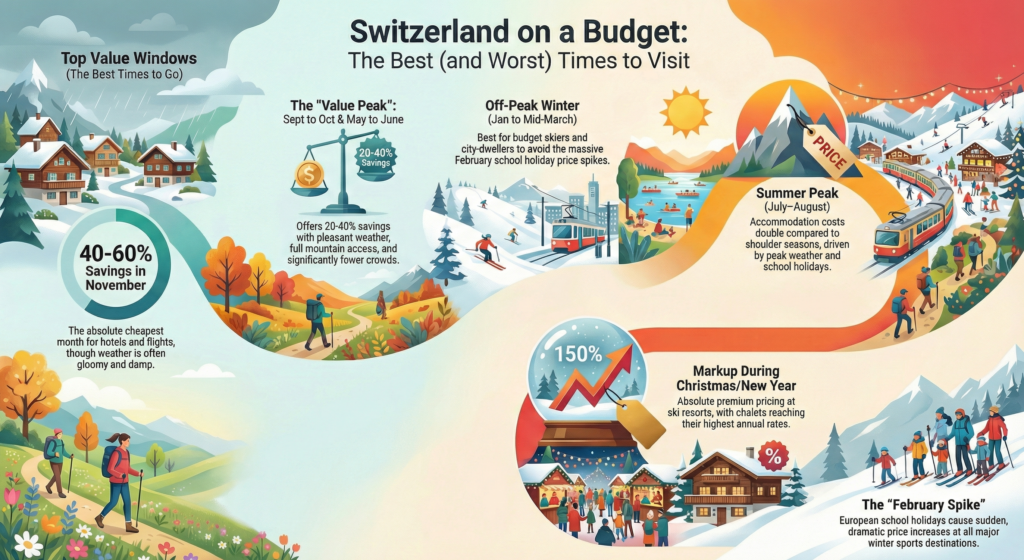
Switzerland experiences among Europe’s most dramatic seasonal price fluctuations, according to 2026 booking data. Peak seasons see accommodation costs increase 50-100% compared to off-peak periods, while shoulder seasons offeran optimal balance between weather quality and budget friendliness.
Peak Season Pricing:
- Summer (July-August): Highest prices in cities and lake regions
- Christmas/New Year (mid-December through early January): Premium ski resort pricing
- February school holidays: Peak winter sports demand
- Easter week: Significant price increases throughout the country
Shoulder Season Value:
- Spring (mid-April through early June): 20-30% below summer peaks
- Autumn (mid-September through October): 20-40% below summer pricing
- Pleasant weather with significantly fewer crowds
Off-Peak Budget Windows:
- Early November through mid-December: Some of the year’s lowest prices
- Early January through mid-March (excluding ski holidays): Winter charm without peak costs
- Cities see dramatic discounts, while some mountain facilities close
Read: Best Budget-Friendly Destinations in Sweden
Cheapest Months to Visit Switzerland
November: Absolute Cheapest Month
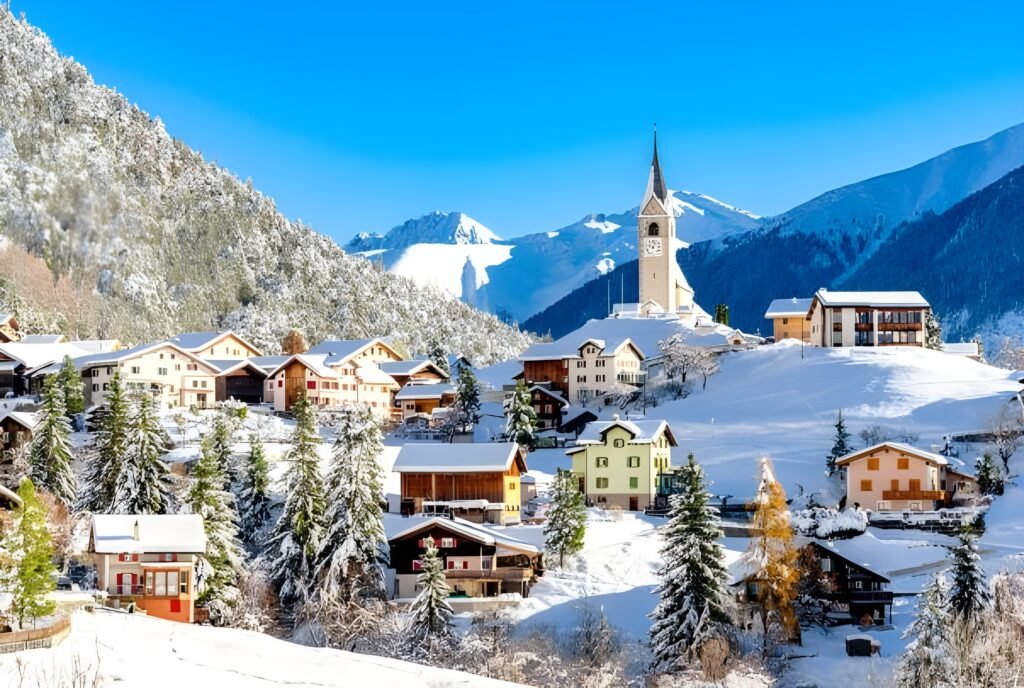
November represents Switzerland’s most budget-friendly month according to verified pricing data, though travelers accept significant tradeoffs.
- Accommodation Savings: 40-60% below summer peaks with three-star hotels in Zurich, Lucerne, and Geneva available for CHF 80-120 ($88-132) versus CHF 180-250 ($198-275) during summer.
- Weather Reality: Gloomy conditions dominate with temperatures averaging 2-8°C (36-46°F). Rain and fog are common at lower elevations while mountain areas transition to winter.
- Operational Challenges: Many mountain cable cars close for maintenance between seasons. Some smaller hotels and restaurants in alpine areas shut down completely. Tourist attractions maintain regular schedules in cities.
- Best For: Extremely budget-focused travelers willing to accept limited mountain access and cool, damp weather in exchange for exceptional accommodation and flight savings.
Early December (Before Mid-December)
Early December provides Switzerland’s second-cheapest period before Christmas season pricing begins.
- Accommodation Value: 30-50% below peak rates with comfortable hotels available at reasonable prices. The Christmas market season begins late November/early December, adding a festive atmosphere.
- Weather: Cold with temperatures 0-5°C (32-41°F). Mountain areas receive early snow while cities remain accessible. Short daylight hours (sunset around 4:30 PM).
- Advantages: Christmas markets create a magical atmosphere without peak holiday pricing. Ski resorts begin opening with less crowded slopes.
- Best For: Travelers seeking a festive atmosphere, early-season skiing, and significant savings before the Christmas rush.
Read: Planning a Europe Trip? Try These Unforgettable Day Trips From Luxembourg
Early January Through Mid-March
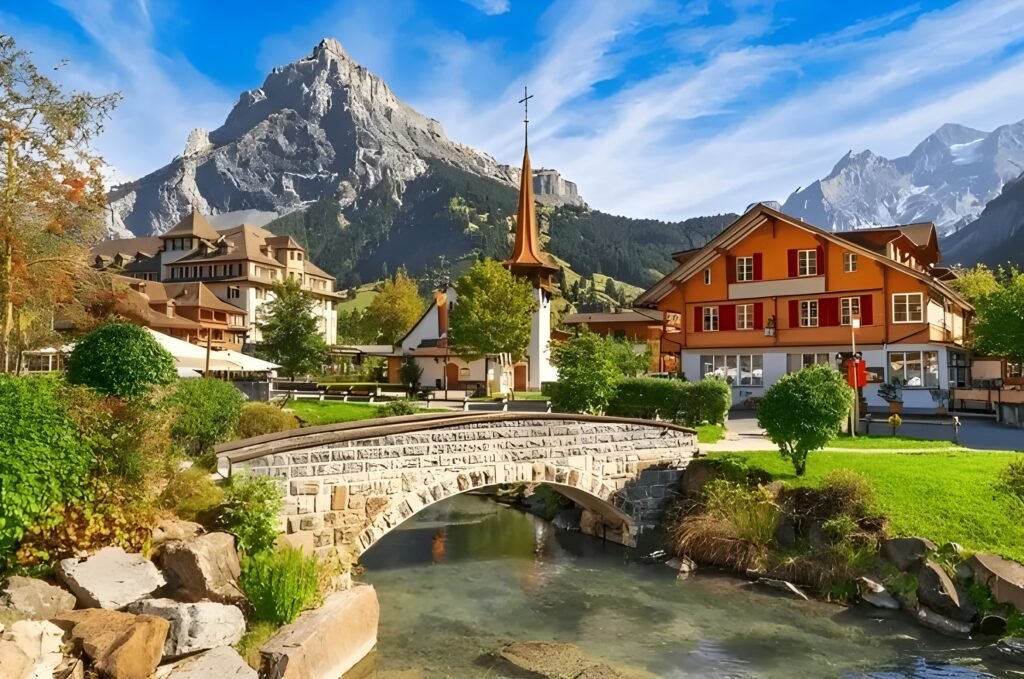
Post-New Year winter represents excellent value outside major ski holiday weeks.
- Cost Benefits: Cities experience the lowest annual prices. Ski resort accommodation drops 40-60% compared to Christmas and February school holidays. Zurich and Geneva hotels available CHF 90-140 ($99-154).
- Weather: Cold and snowy in mountains (perfect for skiing), cold and potentially dreary in cities with temperatures -2 to 5°C (28-41°F).
Peak Ski Weeks to Avoid:
- Late February/early March: European school holidays create ski resort price spikes
- Specific dates vary by country and year, requiring verification
Best For: Budget skiers and winter sports enthusiasts avoiding peak weeks, plus city-focused travelers unbothered by cold weather.
Read: 10 + Best UK Places to Visit for Your Next Adventure
Best Value Shoulder Seasons
Mid-April Through Early June: Spring Budget Window
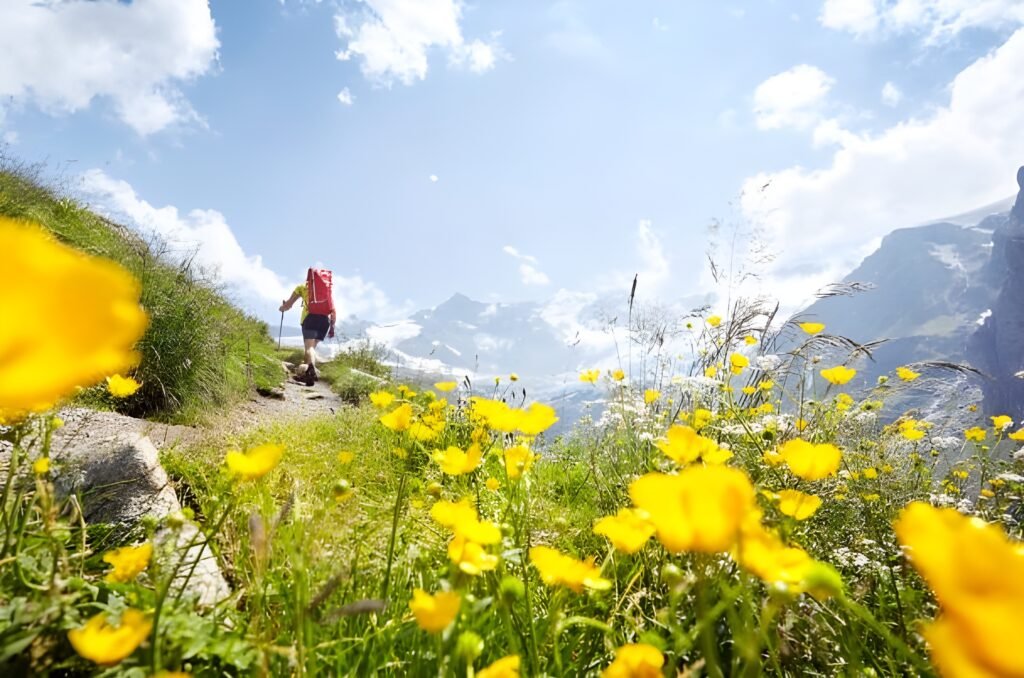
Spring shoulder season delivers exceptional balance between weather quality and cost, according to travel experts.
- Pricing: 20-30% below July-August peaks. Mid-range hotels CHF 120-180 ($132-198) versus summer’s CHF 200-300 ($220-330).
Weather Progression:
- April: Cool temperatures 5-13°C (41-55°F), occasional snow in the mountains, wildflowers beginning
- May: Pleasant 10-18°C (50-64°F), alpine meadows blooming, higher trails opening
- Early June: Warm 15-22°C (59-72°F), most mountain areas accessible
- Operational Status: Mountain cable cars and hiking trails progressively open through May and early June. Cities are fully operational year-round.
- Crowd Levels: Moderate with Easter week exception when prices spike 30-50%.
- Best For: Hikers, photographers (wildflower season), and budget travelers seeking pleasant weather without peak costs.
Read: 10 Most Breathtaking Places to Explore in Canada
Mid-September Through October: Autumn Value Peak
Autumn represents Switzerland’s best overall value period, according to a comprehensive analysis.
- Pricing: 20-40% below summer, with excellent accommodation availability. Three-star hotels CHF 100-160 ($110-176) in major cities.
Weather Quality:
- Mid-September: Still warm 15-20°C (59-68°F) with generally sunny conditions
- October: Cooler 8-15°C (46-59°F), golden foliage creates stunning landscapes
- Operational Advantages: All mountain lifts are still running. Hiking trails are accessible. Vineyards’ harvest season in wine regions.
- Unique Benefits: Grape harvest festivals, golden larch forests, and dramatically fewer tourists than in the summer.
- Best For: Most budget travelers seeking an optimal weather-to-cost ratio. Photographers capturing autumn colors. Wine enthusiasts during harvest season.
Most Expensive Periods to Avoid
July-August: Peak Summer Prices
Summer represents Switzerland’s most expensive period for non-ski destinations.
- Cost Impact: Accommodation increases 50-100% compared to the shoulder seasons. Budget hotels CHF 150-220 ($165-242), mid-range CHF 220-350+ ($242-385+).
- Advantages: Best weather with temperatures 18-28°C (64-82°F). Longest daylight hours (until after 9 PM). All mountain facilities are operating. Snow-free hiking trails.
- Disadvantages: Massive crowds at popular attractions. Higher flight costs. Restaurant reservations are essential at quality establishments.
- When Worth It: Families constrained by school schedules, hikers wanting full mountain access, travelers prioritizing weather over cost.
Read: The 10 best Popular tourist places in Australia
Christmas Through New Year
Mid-December through early January commands Switzerland’s absolute premium pricing.
- Ski Resort Costs: Accommodation increases 80-150% compared to the January low season. Chalets and hotels in Zermatt, St. Moritz, Verbier reach CHF 300-800+ ($330-880+) nightly.
- City Pricing: 40-70% above off-peak rates despite being low season for non-ski areas.
- Justification: Christmas markets, festive atmosphere, reliable snow conditions, and unique holiday traditions.
- Budget Alternative: Visit cities during the Christmas season (lower than resorts) or delay until early January when ski resort prices plummet.
Budget Strategies by Traveler Type
For Ski and Winter Sports Enthusiasts
- Cheapest Ski Period: Mid-January through mid-March (avoiding February school holidays) delivers 40-60% savings versus the Christmas period.
- Alternative Budget Approach: Stay in valley towns (Interlaken, Thun) and take day trips to ski areas versus expensive mountain resort accommodation.
- Summer Ski Resort Value: June-September sees mountain hotels cut rates 50% when ski lifts aren’t running, but hiking and scenery remain spectacular.
For Hikers and Mountain Lovers
- Optimal Budget Window: Late May through mid-June (wildflower season, fewer crowds, moderate prices) or mid-September through early October (autumn colors, warm weather, significant savings).
- Avoid: July-August when trails overflow with tourists and accommodation costs peak despite weather advantages.
Read: 25 + Top Cheap Weekend Getaways in the U.S. for 2026
For City and Culture Focused Travelers
- Maximum Savings: November through March (excluding Christmas/New Year) when cities experience the lowest annual prices while attractions maintain full schedules.
- Strategy: Base in cities during low season, take day trips to mountains when weather permits, save 40-60% on accommodation.
For Families with School Constraints
- Best Available Option: June or September edges of summer vacation when prices moderate compared to July-August peaks.
- Advanced Booking Essential: 3-4 months ahead for summer travel secures better rates and availability.
Flight Cost Timing
According to 2026 flight booking data, Switzerland flight prices vary dramatically by season and booking window.
Cheapest Flight Months:
- November: Lowest average fares
- January-February: Excellent deals (excluding late February)
- Late March-April: Good spring pricing (avoiding Easter week)
Most Expensive Flight Months:
- July-August: Peak summer premiums
- Late December: Christmas travel surcharges
- February school holiday weeks
Booking Window: Purchase 2-6 months ahead for international flights from North America to deliver optimal pricing. Last-minute bookings during peak season cost 50-100% more.
Budget Flight Tip: Consider flying into nearby European hubs (Frankfurt, Munich, Milan), then using budget airlines or trains for the final Switzerland leg if international fares to Zurich/Geneva exceed alternatives by $200+.
Accommodation Budget Strategies
- City Guest Cards: Many Swiss cities provide free or heavily discounted public transport plus attraction discounts when staying at registered accommodations. Basel, Interlaken, and Lauterbrunnen offer particularly valuable cards.
- Airbnb Seasonal Gaps: Private accommodation platforms show smaller seasonal price variations (20-40%) versus hotels (50-100%), making summer rentals relatively better value than summer hotels.
- Hostel Availability: Switzerland maintains an excellent hostel network with dormitory beds CHF 30-50 ($33-55) year-round. Hostels see smaller seasonal price fluctuations than hotels.
- Mountain Hut Stays: Alpine huts operated by the Swiss Alpine Club provide budget mountain accommodation CHF 30-70 ($33-77) including breakfast, available June-September.
Regional Cost Considerations
Expensive Regions Year-Round:
- Zermatt, St. Moritz, Verbier (premium ski resorts)
- Interlaken (tourist gateway to the Jungfrau region)
- Lucerne (extremely popular with tour groups)
Better Value Regions:
- Ticino (Italian Switzerland) offers Mediterranean flavor at slightly lower costs
- Neuchâtel, Jura regions see fewer tourists
- Smaller towns throughout Switzerland cost 30-50% less than famous destinations
Day Trip Strategy: Base in moderately priced cities (Bern, Thun, Lausanne) and take day trips to expensive areas (Jungfrau region, Zermatt) avoiding overnight accommodation costs.
Practical Budget Timing Recommendations
- For Absolute Lowest Costs: Visit November or early January-mid March (avoiding late February). Accept weather limitations and some operational closures. Save 50-60% on accommodation.
- For Best Overall Value: Visit mid-September through early October or May. Balance 20-35% savings with pleasant weather, full operations, and moderate crowds.
- For Summer Travel on a Budget: Choose June or September versus July-August. Book 3-4 months ahead. Consider lesser-known regions over Zermatt and Interlaken.
- For Winter Sports on a Budget: Ski in January (after the New Year) or March (after school holidays). Stay in valley towns, not mountain resorts. Consider smaller ski areas over famous resorts.
Frequently Asked Questions
When is the cheapest time to visit Switzerland?
According to comprehensive 2026 pricing data, November represents Switzerland’s absolutely cheapest month with accommodation costs 40-60% below summer peaks. However, travelers face gloomy weather, short daylight hours, and some mountain facility closures. For better weather with strong savings, mid-September through October and mid-April through May offer 20-35% discounts while maintaining pleasant conditions and full operational status.
Is Switzerland affordable in winter?
Switzerland’s winter affordability depends heavily on specific timing and destination choice. Cities (Zurich, Geneva, Bern) experience lowest annual prices from early November through mid-December and early January through mid-March excluding ski holidays, with 40-60% savings versus summer. However, ski resorts command premium pricing during Christmas/New Year and February school holidays. Budget winter travelers should target cities during off-peak windows or ski resorts during January-March non-holiday weeks.
What month has the best weather in Switzerland on a budget?
Mid-September through early October delivers an optimal balance between weather quality and affordability according to travel experts. Temperatures remain pleasant at 15-20°C (59-68°F) in September, all mountain facilities still operate, autumn foliage creates spectacular scenery, and accommodation costs 20-40% less than July-August peaks. Late May through early June provides similar value during spring with wildflower blooms and warming temperatures.
How much cheaper is Switzerland in shoulder season?
Shoulder seasons (mid-April through May, mid-September through October) offer 20-35% savings on accommodation compared to July-August peaks, according to booking platform data. Three-star hotels costing CHF 250-350 ($275-385) during summer drop to CHF 120-180 ($132-198) during shoulder periods. Flight costs decrease 15-25%, and popular attractions see dramatically reduced crowds while maintaining full operational schedules.
Should I visit Switzerland in November to save money?
November provides Switzerland’s lowest costs but requires accepting significant tradeoffs. Accommodation prices drop 40-60%, flights cost less, and crowds disappear. However, weather proves gloomy with temperatures 2-8°C (36-46°F), frequent rain, and short daylight hours. Many mountain cable cars close for maintenance. November suits extremely budget-focused travelers comfortable with limited mountain access and cool, damp conditions in exchange for exceptional savings.
When should I book Switzerland accommodation for best prices?
Book 2-3 months ahead for shoulder seasons (April-May, September-October) and 3-4 months ahead for summer travel (June-August) to secure optimal pricing and selection according to booking experts. Last-minute availability exists during November-March off-peak periods but summer accommodation requires advance planning. Christmas/New Year requires 4-6 months advance booking at ski resorts.
Is summer worth the extra cost in Switzerland?
Summer justifies higher costs for specific traveler priorities according to comprehensive analysis. Hikers benefit from snow-free trails and full mountain access. Families constrained by school schedules have limited alternatives. Long daylight hours (until after 9 PM) maximize daily experiences. However, budget travelers willing to visit May-June or September-October enjoy 80% of summer advantages at 65-80% of summer costs.
Can I ski cheaply in Switzerland?
Budget skiing remains possible in Switzerland through strategic timing and location choices. Ski during mid-January through mid-March avoiding late February school holidays when resort prices drop 40-60% compared to the Christmas period. Stay in valley towns (Interlaken, Thun, Kanderstatt) commuting to slopes versus expensive mountain resorts. Choose smaller ski areas over premium resorts like Zermatt and St. Moritz. Purchase multi-day lift tickets providing better daily rates.
Summary: The cheap Switzerland travel periods for 2026 depend heavily on traveler priorities, balancing cost savings against weather quality and operational status. November represents the absolute lowest prices with 40-60% accommodation savings but requires accepting gloomy weather, short days, and limited mountain access. Shoulder seasons from mid-April through early June and mid-September through October deliver optimal value with 20-35% savings while maintaining pleasant weather, full facility operation, and significantly reduced crowds compared to peak summer.
Winter budget windows from early January through mid-March (avoiding late February school holidays) provide exceptional value for city-focused travelers and budget skiers, with accommodation costs dropping 40-60% compared to Christmas and summer peaks. However, ski resort prices spike dramatically during Christmas/New Year and February school holidays, making timing crucial for winter sports enthusiasts seeking affordability.
Summer months (July-August) command Switzerland’s highest prices with 50-100% accommodation increases versus shoulder seasons, justified primarily for families constrained by school schedules or hikers prioritizing snow-free trail access. Budget-conscious summer travelers should target June or September edges when prices moderate 20-30% while weather remains generally excellent.
Strategic approaches, including city basing with mountain day trips, guest card utilization providing free local transport, advance booking 2-4 months ahead, and regional selection favoring lesser-known areas over tourist hotspots like Zermatt and Interlaken, reduce total costs 40-60% while maintaining quality Swiss experiences across stunning alpine landscapes, charming villages, and sophisticated cities.
Disclaimer: This guide is based on publicly available tourism data, official travel resources, and general cost estimates current as of 2026. Prices and rules may vary depending on season and traveler profile. Accommodation costs fluctuate dramatically between peak seasons (July-August, Christmas/New Year mid-December through early January, February school holidays) and off-peak periods (November, January-March excluding ski weeks) with variations of 40-100% common across identical properties. Specific ski holiday dates vary annually by country, requiring verification for European school break timing. Weather patterns vary yearly, with shoulder season conditions (April-May, September-October) generally pleasant but not guaranteed.
Mountain cable car and hiking trail opening/closing dates depend on snow conditions, varying by elevation and annual weather patterns. Flight prices change constantly based on departure cities, airlines, booking timing, and seasonal demand. The CHF/USD exchange rate fluctuates daily, impacting actual costs for international travelers. Guest card availability and benefits vary by city, with major programs in Basel, Interlaken, Lauterbrunnen, and other destinations requiring verification through accommodation providers. Always verify current pricing, facility operational status, weather forecasts, and specific travel dates through official sources, including Switzerland Tourism, individual accommodation websites, and recent traveler reports before finalizing travel plans. This article provides informational guidance only and does not constitute official travel or financial advice.