
Determining the best time to visit Dubai requires understanding how the city’s extreme climate variations create dramatically different travel experiences, costs, and activity options throughout the year. According to comprehensive tourism data and verified weather patterns for 2026, November through March represents the optimal visiting period, offering pleasant temperatures (24-28°C/75-82°F), ideal outdoor conditions, and vibrant events, though travelers face premium pricing and peak crowds during these months compared to the significant discounts available during Dubai’s intense summer season from June through August.
This comprehensive month-by-month guide examines Dubai’s weather patterns, travel costs, crowd levels, and major events to help travelers select ideal visit times matching their priorities, whether seeking perfect beach weather, budget-friendly rates, festive celebrations, or outdoor adventure opportunities.
Understanding Dubai’s Climate Patterns
Dubai experiences a hot desert climate with two distinct seasons according to meteorological data. The winter period from November through March brings pleasant, comfortable temperatures perfect for outdoor activities, while the summer months from May through September deliver extreme heat and humidity that limit outdoor exposure to early mornings and evenings.
Dubai receives minimal rainfall throughout the year, with February representing the wettest month at approximately 40mm total precipitation. The city enjoys eight hours of daily sunshine during the winter months, increasing to ten hours during the summer, according to weather statistics.
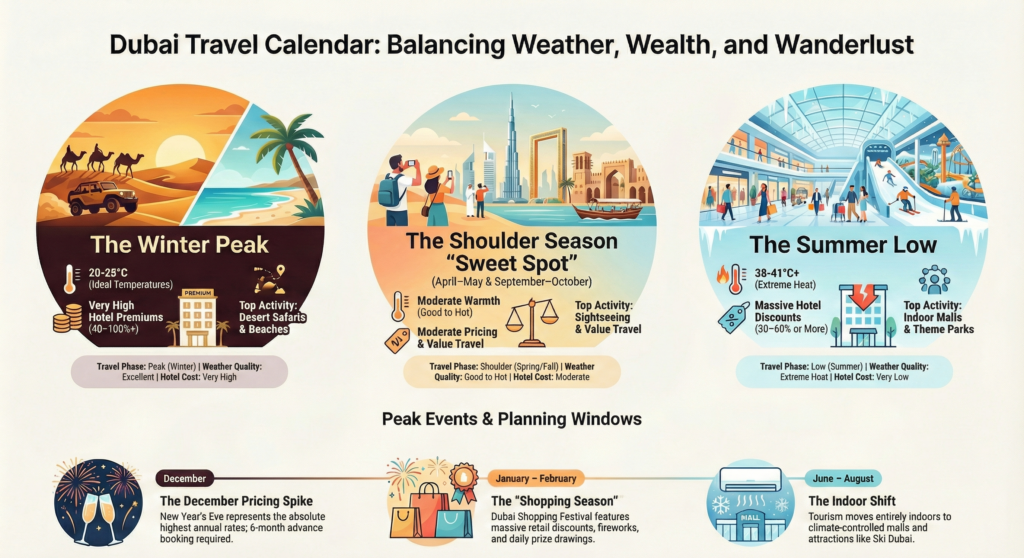
Peak vs Off-Peak Season Overview
Peak Season (November-March):
- Pleasant temperatures averaging 20-28°C (68-82°F)
- Crowded attractions and beaches
- Hotel prices 40-100% higher than in summer
- Advance booking essential for popular dates
- Ideal for outdoor activities and sightseeing
Shoulder Season (April-May, September-October):
- Warm to hot temperatures (27-38°C / 81-100°F)
- Moderate crowds and pricing
- Good balance between weather and value
- Suitable for heat-tolerant travelers
Low Season (June-August):
- Extreme heat exceeding 38-41°C (100-106°F)
- Significantly fewer crowds
- Hotel discounts of 30-60% or more
- Focus on indoor attractions and activities
- Best for budget-conscious travelers
January: Peak Winter Conditions

January ranks among Dubai’s most popular months with comfortable temperatures and numerous events, according to tourism data.
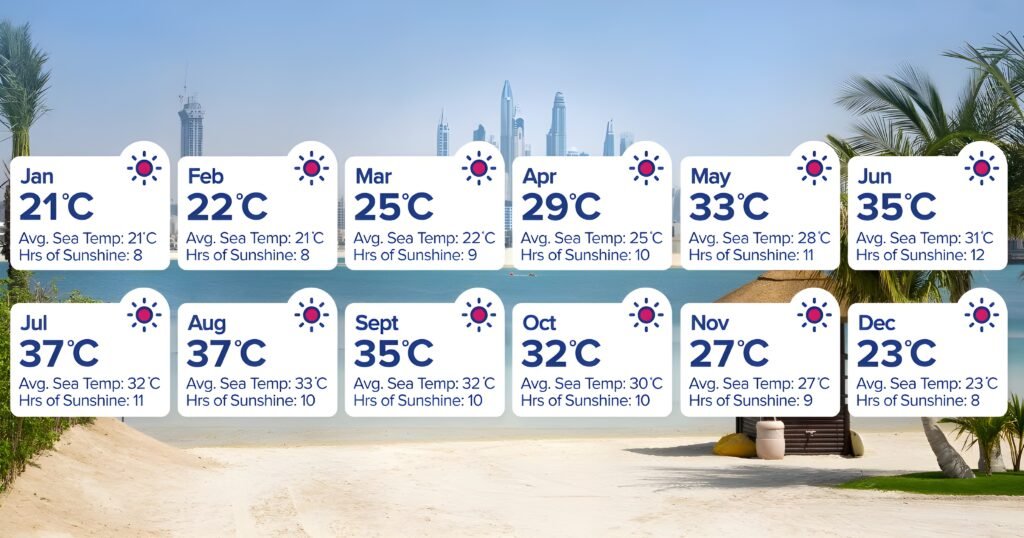
- Weather: Average temperatures range 18-24°C (64-75°F) with cool evenings potentially requiring light jackets. January represents Dubai’s coldest month with approximately eight hours of daily sunshine and minimal rainfall, averaging two days monthly.
- Events: The month-long Dubai Shopping Festival (typically January-February) offers retail discounts, promotions, daily prize drawings including gold bars and luxury cars, entertainment, and spectacular fireworks displays. The festival attracts significant visitor numbers, creating a bustling atmosphere throughout the city.
- Crowd Level: High. January sees substantial tourist arrivals seeking winter sun and shopping festival experiences.
- Hotel Costs: Premium pricing with three-star hotels averaging around AED 300-600 (USD 81-163) nightly and five-star properties ranging from AED 800-2,500+ (USD 217-680+) per night. Downtown Dubai and beachfront areas command the highest rates.
- Verdict: Excellent for outdoor activities, sightseeing, and shopping, though travelers face peak-season pricing and crowds.
February: Continued Winter Excellence
February maintains January’s pleasant conditions while adding cultural festivals and sporting events.
- Weather: Temperatures average 18-21°C (64-70°F), representing comfortable conditions for extensive outdoor exploration. February typically experiences Dubai’s highest rainfall at approximately 40mm distributed across 2-3 days monthly, though precipitation remains minimal by global standards.
- Events: Dubai Food Festival celebrates the city’s diverse culinary scene with special menus, food trucks, and gastronomic experiences. The Dubai Jazz Festival attracts international jazz artists for month-long performances. The Omega Dubai Desert Classic golf tournament brings prestigious sporting action.
- Crowd Level: High. February remains within peak tourist season, with particular popularity among European visitors escaping winter.
- Hotel Costs: Premium rates comparable to January with mid-range properties around AED 600-900 (USD 163-245) nightly and luxury hotels exceeding AED 1,500 (USD 408).
- Verdict: Ideal weather for all outdoor activities with special events enhancing experiences, though pricing remains elevated.
March: Spring Transition Begins

March marks the transition from winter peak season toward warmer spring temperatures while maintaining generally pleasant conditions.
- Weather: Temperatures rise to an average of 21-25°C (70-77°F), creating ideal beach weather. March ranks as the driest month with approximately one day of rainfall. Eight hours of daily sunshine support extensive outdoor activities.
- Events: The Annual Festival of Literature attracts authors and book lovers. The Sikka Art Fair showcases local and regional artists in heritage venues. Weather conditions favor outdoor festivals and events.
- Crowd Level: Very high. March coincides with spring break periods for European schools, creating peak visitor volumes.
- Hotel Costs: Premium pricing continues with beachfront and resort properties commanding the highest rates. Budget travelers find limited availability requiring advance booking.
- Verdict: Perfect beach weather and comfortable sightseeing temperatures, though crowds peak and accommodation costs remain elevated.
April: Summer Approaches

April experiences noticeably warmer temperatures as summer heat begins building, though conditions remain manageable for most travelers.
- Weather: Temperatures average 25-31°C (77-88°F) with warm days and increasingly hot conditions, particularly late afternoon. Approximately one day of rainfall. Sunshine extends as temperatures rise.
- Events: Event schedules lighten as peak season concludes. Cultural programming continues at museums and galleries.
- Crowd Level: Moderate. International tourist numbers decrease as European spring breaks end while summer heat approaches.
- Hotel Costs: Prices begin declining from winter peaks with mid-range hotels around AED 400-700 (USD 109-190) nightly as the shoulder season emerges.
- Verdict: Good balance between comfortable weather and moderate pricing for travelers tolerating warmer temperatures.
May: Early Summer Heat

May marks summer’s arrival with significantly increased temperatures, limiting outdoor activities to morning and evening hours.
- Weather: Average temperatures reach 27-36°C (81-97°F) with hot, dry conditions. Minimal rainfall and intense sunshine characterize the month. Humidity begins increasing, creating less comfortable conditions.
- Events: Few major events as activity levels decrease due to rising heat.
- Crowd Level: Low. Tourist numbers drop substantially as summer heat intensifies.
- Hotel Costs: Noticeable discounts emerge with rates dropping 20-30% from peak season. Mid-range properties average AED 300-500 (USD 81-136) nightly.
- Verdict: Budget-friendly with good indoor activity options, though outdoor exploration becomes challenging during daytime hours.
June: Summer Peak Heat Begins

June represents Dubai’s transition into extreme summer conditions, with the lowest hotel prices of the year according to booking data.
- Weather: Temperatures soar to 30-38°C (86-100°F) with high humidity, creating uncomfortable conditions for outdoor exposure. June marks the beginning of truly oppressive summer heat.
- Events: Dubai Summer Surprises begins, offering retail promotions, entertainment, and family activities designed to attract visitors despite challenging weather. The program extends through August.
- Crowd Level: Very low. International tourism drops dramatically, though some regional visitors arrive.
- Hotel Costs: Lowest of the year with discounts of 30-60% or more compared to winter. Three-star hotels available from AED 200-400 (USD 54-109) nightly, luxury properties from AED 600-1,200 (USD 163-327).
- Verdict: Extreme budget value for travelers comfortable with intense heat and focusing on indoor activities, including malls, museums, and aquariums.
July: Peak Summer Intensity
July represents one of Dubai’s hottest, most humid months, with extreme temperatures limiting outdoor activities.
- Weather: Average temperatures reach 35-41°C (95-106°F) with high humidity creating oppressive conditions. Outdoor exposure beyond sunrise and sunset hours proves challenging for most visitors.
- Events: Dubai Summer Surprises continues with weekly themed events, indoor entertainment, and shopping promotions designed to compensate for weather limitations.
- Crowd Level: Very low. Tourism reaches annual minimums except for regional visitors from neighboring Gulf states.
- Hotel Costs: Extremely low with aggressive discounting. Budget hotels from AED 150-350 (USD 41-95) nightly, luxury properties offering significant promotions.
- Verdict: Best for budget travelers prioritizing indoor experiences, including world-class malls, indoor ski slopes, aquariums, and theme parks at the lowest annual rates.
August: Continued Summer Heat
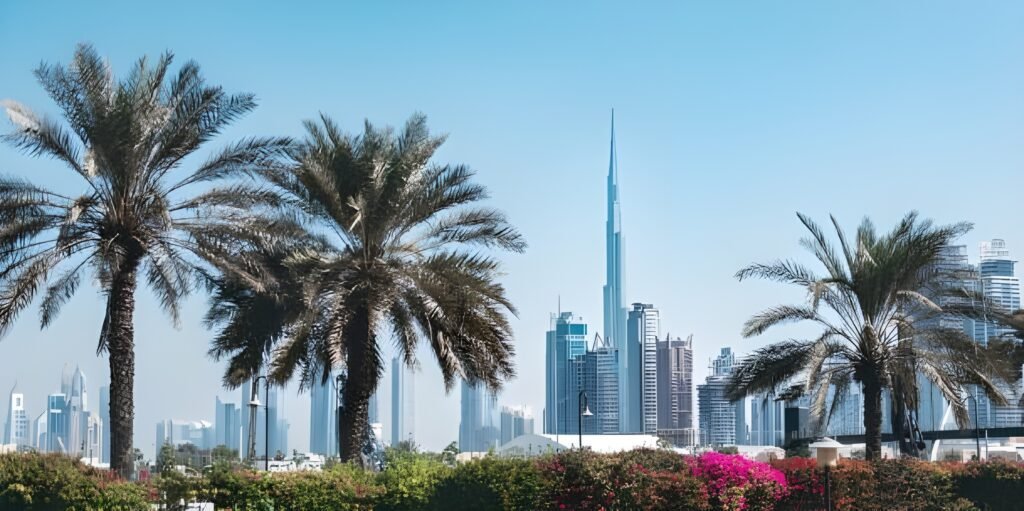
August maintains July’s extreme temperatures with high humidity, creating the year’s most challenging weather conditions.
- Weather: Temperatures average 36-41°C (97-106°F) with humidity peaks creating uncomfortable outdoor conditions. Sea temperatures reach approximately 33°C (91°F), making swimming less refreshing.
- Events: The final month of Dubai Summer Surprises concludes seasonal promotion programming.
- Crowd Level: Very low, though Eid al-Adha (dates vary annually based on the Islamic lunar calendar) may bring regional visitors.
- Hotel Costs: Extremely low, comparable to Jul,y with continued aggressive promotional pricing.
- Verdict: Maximum budget savings for travelers accepting extreme heat and indoor-focused itineraries.
September: Autumn Transition Begins
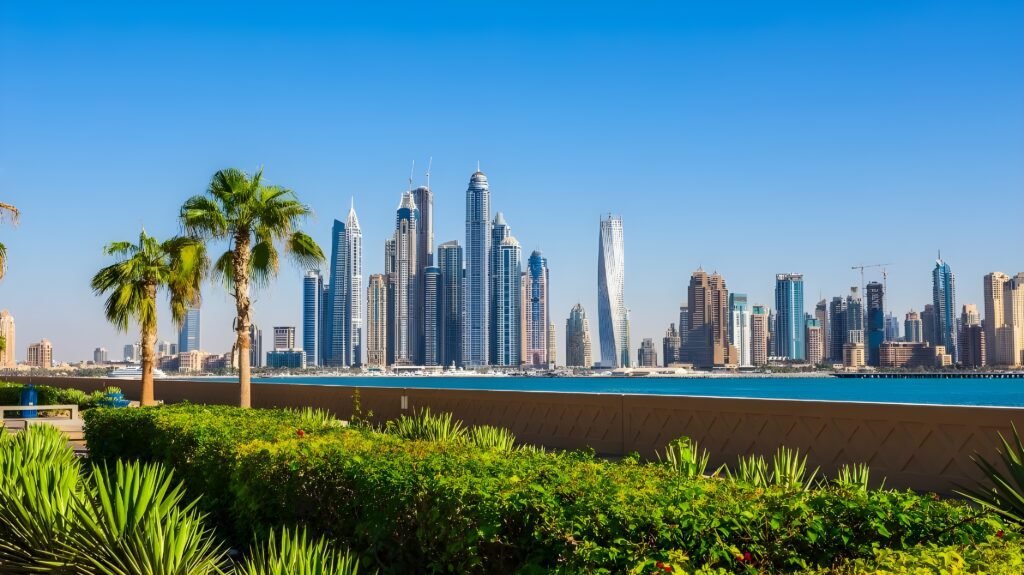
September marks gradual temperature decreases though conditions remain hot, particularly early month.
- Weather: Average temperatures range 30-38°C (86-100°F) with slight improvements from August peaks. Late September brings noticeable evening cooling creating more comfortable conditions.
- Events: Event programming begins to increase as autumn approaches, with cultural exhibitions and performances.
- Crowd Level: Low, though increasing towardthe month’s end as temperatures moderate.
- Hotel Costs: Low with shoulder season pricing around AED 300-600 (USD 81-163) for mid-range properties as autumn deals emerge.
- Verdict: Good value for heat-tolerant travelers with late September offering improving conditions and continued budget pricing.
October: Pleasant Autumn Arrives

October delivers significantly more comfortable conditions as temperatures moderate and outdoor activities become feasible throughout the day.
- Weather: Temperatures average 27-35°C (81-95°F) with noticeably more pleasant conditions compared to summer months. Lower humidity and comfortable evenings support outdoor dining and activities.
- Events: Event schedules increase with exhibitions, cultural programming, and outdoor activities resuming. The month represents preparation for peak winter season.
- Crowd Level: Moderate and increasing. October attracts travelers seeking good weather without peak-season crowds.
- Hotel Costs: Moderate with shoulder season rates around AED 400-800 (USD 109-218) for mid-range properties, lower than winter but higher than summer.
- Verdict: Excellent balance between comfortable weather, moderate pricing, and manageable crowds for value-conscious travelers.
November: Peak Season Returns

November marks peak season with ideal temperatures and dramatically increased visitor numbers.
- Weather: Average temperatures range from 24 to 31°C (75-88°F), creating perfect conditions for beach activities, desert safaris, and extensive outdoor exploration. Approximately 8 hours of daily sunshine with minimal rainfall.
- Events: Dubai Fitness Challenge encourages month-long physical activity with free fitness classes and events. Downtown Design and Dubai Design Week showcase international design talent.
- Crowd Level: High. November launches the peak tourist season with substantial international arrivals.
- Hotel Costs: Significant increases from October with mid-range hotels around AED 600-1,200 (USD 163-327) nightly as demand surges.
- Verdict: Ideal weather and event programming, though travelers face increasing prices and crowds requiring advance booking.
December: Festive Peak Season
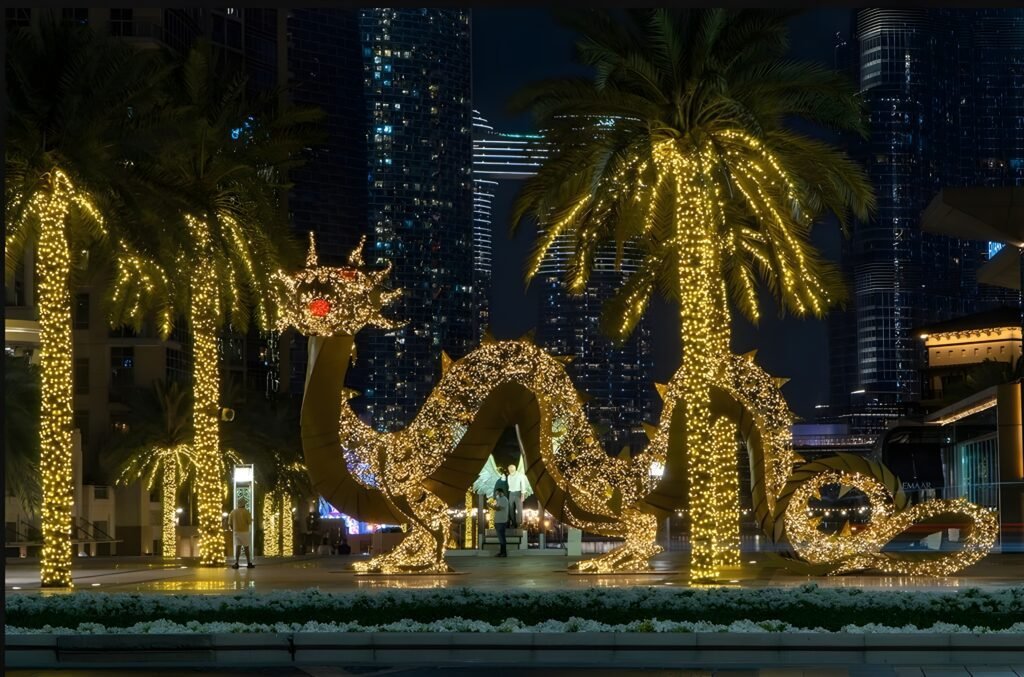
December delivers excellent weather combined with festive celebrations and year-end events creating Dubai’s most expensive travel period.
- Weather: Average temperatures range 20 to 28°C (68-82°F) with cool, comfortable evenings. December provides optimal outdoor conditions though represents one of cloudier months.
- Events: UAE National Day (December 2) brings fireworks and celebrations. Dubai International Film Festival showcases international cinema. Formula 1 Abu Dhabi Grand Prix attracts motorsport enthusiasts. Spectacular New Year’s Eve celebrations include record-breaking fireworks at Burj Khalifa.
- Crowd Level: Very high particularly final two weeks approaching New Year with advance bookings essential.
- Hotel Costs: Premium pricing with New Year period commanding highest annual rates. Mid-range hotels AED 900-1,600+ (USD 245-435+) nightly, luxury properties AED 2,000-4,000+ (USD 544-1,088+). New Year’s Eve specifically sees extreme price spikes.
- Verdict: Spectacular weather and festive atmosphere with world-class celebrations though travelers face peak pricing and massive crowds.
Cost Comparison Table
According to 2026 booking data and hotel pricing patterns:
| Month | Weather Rating | Hotel Cost Level | Crowd Level | Best For |
|---|---|---|---|---|
| January | Excellent | Very High | High | Shopping, Events |
| February | Excellent | Very High | High | Weather, Culture |
| March | Excellent | Very High | Very High | Beaches, Outdoor |
| April | Good | Moderate | Moderate | Shoulder Season |
| May | Hot | Low-Moderate | Low | Budget, Indoor |
| June | Very Hot | Very Low | Very Low | Maximum Budget |
| July | Extreme | Very Low | Very Low | Indoor Activities |
| August | Extreme | Very Low | Very Low | Mall Shopping |
| September | Hot | Low | Low | Late Autumn Deals |
| October | Good | Moderate | Moderate | Balance, Value |
| November | Excellent | High | High | Perfect Weather |
| December | Excellent | Very High | Very High | Festivities, NYE |
Practical Planning Considerations
- Advance Booking Requirements: Peak season months (November-March) require hotel bookings 2-3 months ahead, particularly December and New Year period when popular properties sell out 4-6 months early. Summer months offer last-minute booking flexibility with aggressive promotional rates.
- Islamic Holidays: Ramadan dates shift annually based on lunar calendar. During Ramadan, restaurants close during daylight hours outside hotels and designated areas. Eid al-Fitr following Ramadan and Eid al-Adha bring regional visitor surges increasing hotel demand and pricing.
- Outdoor Activity Limitations: Summer months (June-August) restrict outdoor activities to sunrise (before 9 AM) and evening (after 7 PM) periods. Desert safaris, beach time, and walking tours prove challenging or impossible during midday summer heat.
- Indoor Alternatives: Dubai Mall, Mall of the Emirates, and numerous other climate-controlled facilities provide year-round entertainment including Ski Dubai indoor ski slope, Dubai Aquarium, VR Park, and countless retail options making summer visits viable for indoor-focused travelers.
Frequently Asked Questions
What is the best month to visit Dubai?
According to comprehensive tourism data, November through March represents the best period to visit Dubai offering pleasant temperatures (20-28°C/68-82°F), ideal outdoor activity conditions, and vibrant event programming. Within this window, November and February typically provide optimal balance between excellent weather and slightly more moderate pricing compared to December-January peaks. However, travelers should expect premium accommodation costs, advance booking requirements, and significant crowds during these prime months.
What is the cheapest month to visit Dubai?
June, July, and August represent Dubai’s cheapest months with hotel discounts of 30-60% or more compared to winter peaks according to booking platform data. June specifically offers the lowest rates as summer heat begins intensifying while July-August maintain extreme budget pricing. Three-star hotels available from AED 150-400 (USD 41-109) nightly versus AED 600+ during winter. However, travelers face temperatures exceeding 38-41°C (100-106°F) with high humidity limiting outdoor activities to early morning and evening hours.
Should I visit Dubai in summer?
Summer visits suit budget-conscious travelers comfortable with extreme heat and indoor-focused itineraries. June through August delivers Dubai’s lowest hotel rates, minimal crowds at indoor attractions, and aggressive promotional pricing on tours and activities. Indoor options including world-class malls, Ski Dubai, aquariums, museums, and theme parks operate year-round with air conditioning. Travelers prioritizing beach time, desert safaris, and outdoor exploration should avoid summer months when temperatures regularly exceed 40°C (104°F) with oppressive humidity.
When is Dubai too hot for tourists?
July and August represent Dubai’s peak heat period with average temperatures reaching 36-41°C (97-106°F) and high humidity creating uncomfortable conditions for extended outdoor exposure. June and September remain very hot at 35-38°C (95-100°F). According to tourism patterns, international visitor numbers drop 60-70% during these months as extreme weather limits outdoor activities to sunrise and sunset periods. Indoor attractions operate normally though outdoor sightseeing proves challenging for most travelers.
What is Dubai like in December?
December delivers excellent weather with temperatures averaging 20-28°C (68-82°F) creating ideal conditions for beaches, outdoor dining, desert safaris, and sightseeing. The month features festive celebrations including UAE National Day (December 2) and spectacular New Year’s Eve fireworks at Burj Khalifa. However, December represents Dubai’s most expensive period with hotel rates increasing 40-100% from summer levels and New Year’s week specifically commanding premium pricing. Advance booking 3-6 months ahead essential for popular dates.
Is Ramadan a good time to visit Dubai?
Ramadan creates unique cultural experiences though requires understanding of restrictions. Restaurants outside hotels close during daylight fasting hours, though hotel dining remains available. Alcohol service becomes more restricted. Tourist attractions operate on modified schedules with reduced crowds. Hotel prices drop 20-30% below normal rates for equivalent months creating value opportunities. Ramadan dates shift annually based on Islamic lunar calendar requiring verification for specific year planning.
What should I pack for Dubai?
Winter months (November-March) require light layers, breathable fabrics, sun protection, and light jackets for cool evenings. Summer months need minimal lightweight clothing, maximum sun protection (SPF 50+, hats, sunglasses), and hydration supplies. Year-round essentials include modest clothing for mosque visits, comfortable walking shoes, and swimwear for hotel pools and beaches. Indoor venues maintain freezing air conditioning requiring light covers. Conservative dress (covered shoulders, longer shorts/skirts) respects local customs.
How far in advance should I book Dubai hotels?
Peak season months (December-March) require booking 2-3 months ahead with December holidays and New Year specifically needing 4-6 months advance reservations according to hotel occupancy patterns. Shoulder months (April, October-November) benefit from 4-8 weeks advance booking while summer months (June-August) allow last-minute reservations with promotional pricing often available days before arrival. Major events including Formula 1, international exhibitions, and festivals require early booking regardless of month.
Summary: The best time to visit Dubai fundamentally depends on individual priorities balancing weather preferences, budget constraints, and crowd tolerance. November through March delivers Dubai’s optimal weather with temperatures ranging 20-28°C (68-82°F) creating perfect conditions for beaches, desert adventures, and outdoor exploration, though travelers face premium pricing with hotels costing 40-100% more than summer alongside significant crowds requiring advance planning.
June through August offers extreme budget value with hotel discounts of 30-60%, minimal crowds, and promotional pricing across activities, though temperatures exceeding 38-41°C (100-106°F) with oppressive humidity limit outdoor exposure to early morning and evening hours while focusing itineraries on world-class indoor attractions including malls, museums, and climate-controlled entertainment venues.
Shoulder seasons during April-May and September-October provide balanced alternatives combining moderate temperatures (27-35°C/81-95°F), reasonable pricing between winter peaks and summer discounts, and manageable crowds for travelers prioritizing value without extreme summer heat or winter premium costs.
December represents Dubai’s most spectacular though expensive month featuring perfect weather, festive celebrations including record-breaking New Year’s Eve fireworks, and vibrant atmosphere commanding highest annual accommodation rates particularly final two weeks. November and February offer excellent weather with slightly more moderate pricing than December-January peaks while March sees spring break crowds creating very high visitor volumes.
Understanding monthly weather patterns, pricing cycles, crowd dynamics, and event schedules enables travelers to select optimal Dubai visit times matching personal preferences whether seeking budget savings, perfect conditions, festive experiences, or balanced value propositions throughout this dynamic desert metropolis.
Disclaimer: This guide is based on publicly available tourism data, official travel resources, and general cost estimates. Prices and rules may vary depending on season and traveler profile. Hotel costs fluctuate dramatically based on specific properties, locations (Downtown Dubai, Dubai Marina, Palm Jumeirah versus outer areas), booking timing, and dynamic pricing algorithms with quoted ranges representing general market patterns rather than guaranteed rates. Weather conditions vary annually with temperature and rainfall averages representing multi-year patterns. Islamic holiday dates including Ramadan and Eid shift annually based on lunar calendar requiring verification for specific travel years. Event dates and programming subject to change.
Peak season pricing particularly around New Year’s Eve, major holidays, and international events can exceed quoted estimates substantially. Summer heat intensity varies with individual tolerance levels. Always verify current weather forecasts, hotel availability and pricing, event schedules, and entry requirements through official sources including Dubai tourism authorities, hotel booking platforms, and recent traveler reports before finalizing travel plans. This article provides informational guidance only and does not constitute official travel advice.